Enterprise QA teams often need production-like data to test applications properly. Customer records, orders, invoices, and account information provide the context for testing business processes, particularly when several systems are involved. Using that information outside production, however, raises questions about how personal data is handled.
PII masking is an important part of test data management because it allows organizations to prepare realistic datasets without unnecessarily exposing sensitive information. The difficulty lies in changing the right values without interfering with the records and relationships that applications rely on.
For SAP environments connected to CRM, finance, and other enterprise systems, this can be more complicated than replacing a few names or email addresses.
What is PII masking in test data management?
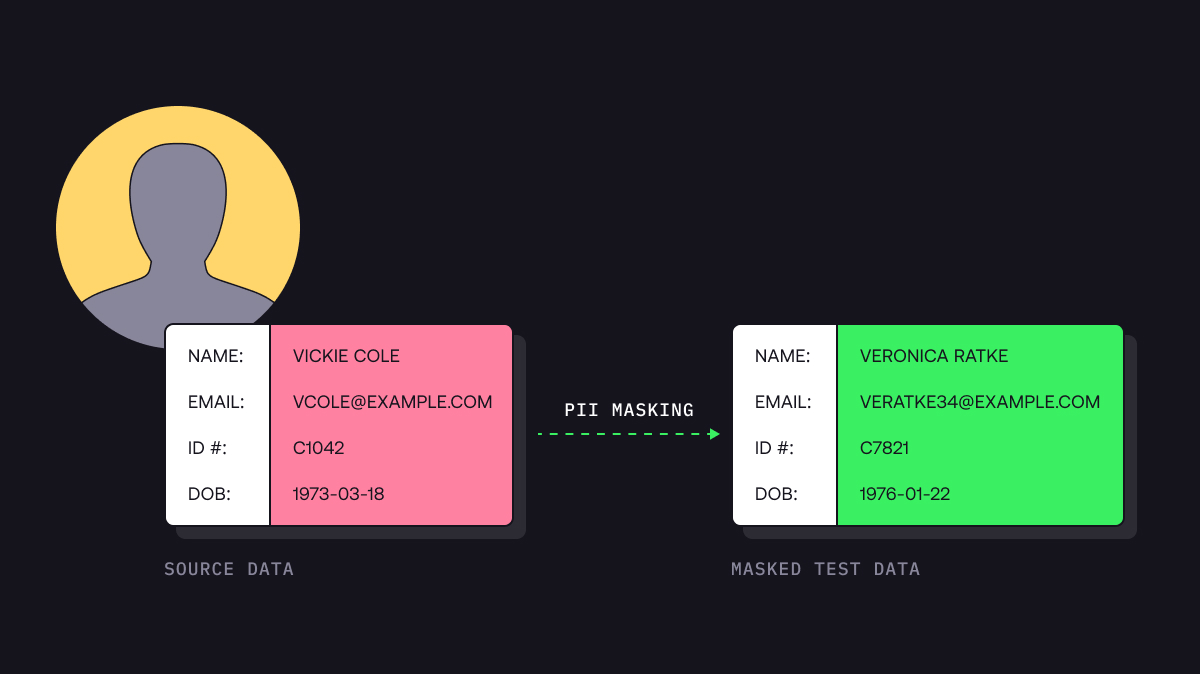
PII masking involves replacing personally identifiable information (PII) with substitute values when preparing data for development, testing, or other non-production activities.
A customer name might be replaced with a fictional one, for example, while an email address is changed to another correctly formatted address. Identifiers require more care because the same value may appear in several tables or applications. Changing it in one place and leaving it untouched elsewhere can affect how the records work together.
For test environments, masking generally involves transforming the data before it's provisioned. Dynamic masking takes a different approach by controlling which values a user can see, without necessarily changing the information stored in the database.
Synthetic data generation can help fill gaps in existing test datasets by creating new records for specific scenarios. Masking, meanwhile, protects sensitive information in existing data.
Masking doesn't necessarily make data anonymous. In some cases, individuals can still be identified by combining masked records with other information. Organizations therefore need to consider access controls, data retention, and how their masking practices align with applicable privacy regulations.
Keeping enterprise test data realistic after masking
Consider an Order-to-Cash test involving customer master data and sales orders in SAP.
In an illustrative dataset, a customer called Maria Chen has the customer number C1042, which also appears on several sales orders. The masking process replaces the name with a fictional one and changes the customer number to C7821.
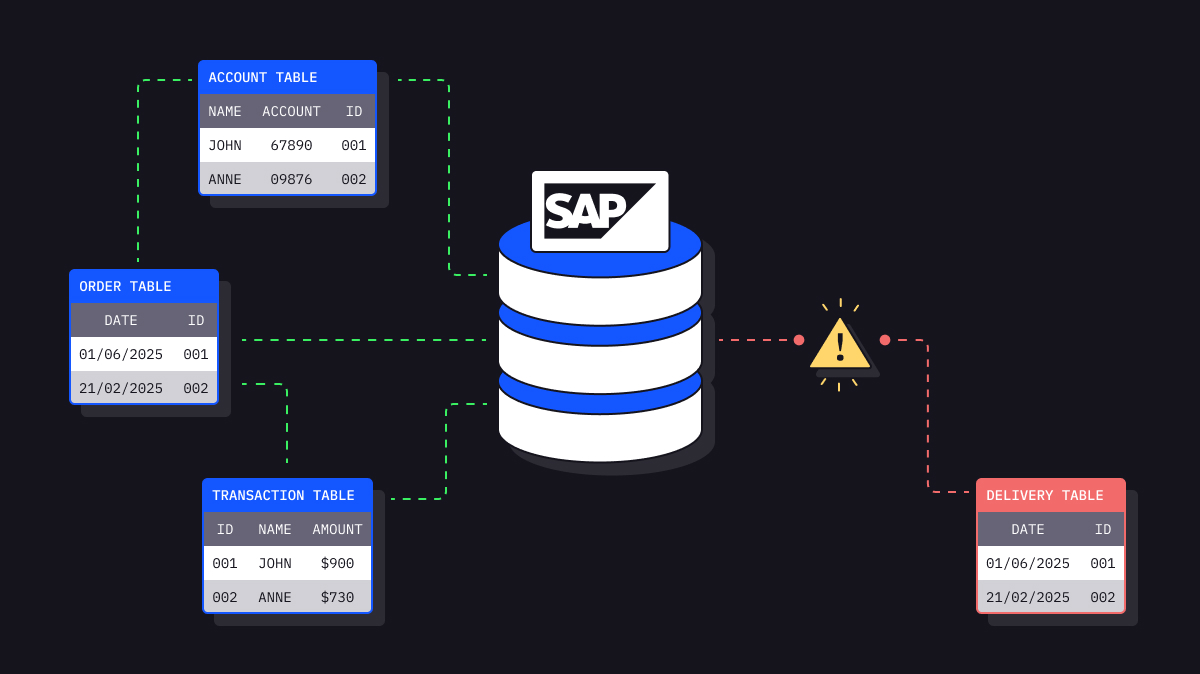
Every sales order linked to that customer must now reference C7821. If the orders retain C1042, the test may fail because the data no longer represents a valid customer relationship.
The same issue can arise between applications. A CRM record may be linked to transactions in SAP, with further information held in a finance system. Preparing data for only one of those applications can leave the overall test scenario incomplete.
Replacement data also needs to follow the application's formatting rules. For example, an invalid email address, phone number, or customer ID could cause a test to fail before the team reaches the functionality it wants to check.
QA teams therefore need to check more than whether sensitive values have been replaced. They need to know that the prepared dataset still supports the transactions, exceptions, and business conditions they intend to test. Security teams need to verify that the sensitive information identified for masking has been handled according to the agreed rules.
Both sets of checks belong in the preparation process, before the data reaches the test environment.
Build PII masking into an automated test data workflow
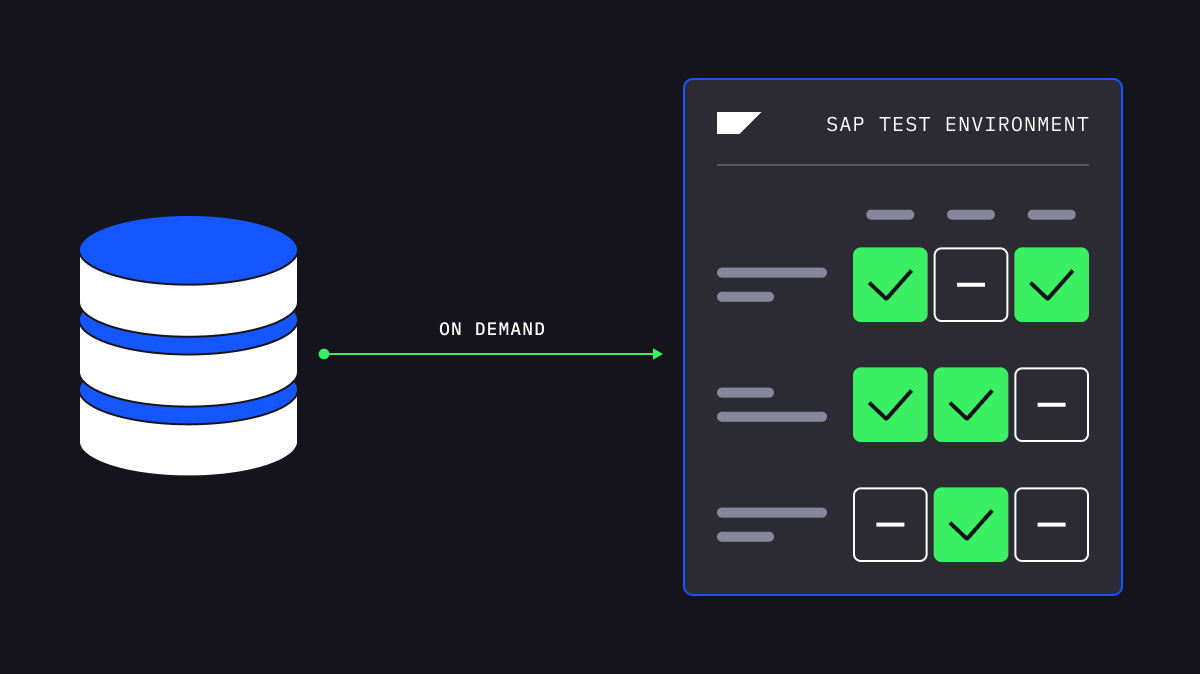
Manual preparation becomes difficult to maintain when test environments need frequent refreshes or multiple teams are working with the same applications. Test data automation offers a way to apply masking rules consistently without starting the process again for each test cycle.
Start by identifying the data required for testing, including any sensitive fields and relationships between records. QA and security teams can then agree on the masking rules, access controls, and test scenarios to cover.
Once the masking rules have been applied, the dataset needs to be checked to confirm that sensitive information is protected and the records still meet the application's requirements.
Once the data has been approved, it can be made available in the test environment. You can use the same process to refresh datasets as testing needs change, with appropriate cleanup and data retention measures in place.
Keeping a record of the masking rules, changes, and validation results can help teams investigate test failures and demonstrate how the data was prepared during security reviews.
How Synthesized supports enterprise-wide test data management
The Synthesized platform brings data masking capabilities together with sensitive data discovery, subsetting, synthetic data generation, and provisioning.
Synthesized is the only end-to-end test data management platform unifying SAP and non-SAP test data operations. This is especially relevant to enterprise processes that depend on information held across several applications.
An Order-to-Cash test might involve customer data held in a CRM system, sales transactions in SAP, and financial records in another application. Masking needs to preserve the links between these records while protecting sensitive customer information.
With Synthesized, teams can prepare masked subsets of existing data for the scenarios they need to test. Synthetic data generation can be used when additional records or conditions are required. These activities sit within the same test data management platform, rather than requiring teams to handle each part of the preparation process separately.
Masking rules and data preparation workflows can also be reused as testing continues, helping teams spend less time on repeated manual work.
Evaluating enterprise testing tools for data privacy
When assessing enterprise testing tools, start with the applications and business processes that need test data. A tool may be able to mask individual fields but still struggle with datasets that depend on relationships across multiple systems.
Check which databases and applications the tool supports, how masking rules are managed, and whether related records remain connected. The masked data should also be tested in the target application to confirm it works as expected.
Automation is another consideration. Teams should examine how datasets are provisioned, how refreshes are handled, and whether the process can fit into existing testing schedules.
Security reviewers will have their own requirements around deployment, permissions, data handling, and the evidence available for compliance assessments.
A focused proof of concept using a real business process, with fictional or appropriately protected data, can help both QA and security teams assess the results before wider adoption.
Make secure test data repeatable
The value of PII masking depends on what happens after the sensitive fields have been transformed. Enterprise teams still need data that works in their applications and supports the scenarios they plan to test.
Synthesized combines masking with the preparation and provisioning activities needed to manage test data across SAP and non-SAP environments.
Book a demo to explore how Synthesized can support your enterprise test data masking workflow.