
AI agents · Joule
AI agents read SAP data and act on it: they create orders, post documents and answer questions about customers and employees. Testing them needs realistic business data, many repeat runs and a clean state each time, without real personal data in prompts, logs or test systems.






Why agents are different
 01
01 02
02 03
03 04
04How it works
Order-to-cash, procure-to-pay or the HR processes your agents work in, with the edge cases they must handle.
Subset and mask production into the agent test system, or generate the records production doesn't have.
Call the Synthesized API from your test harness, so every run starts from the same state.
Because the data is the same each time, differences come from the agent, not from the data.
Platform
A scan flags personal data in SAP tables and the systems around them, then masking replaces it with realistic values, the same way everywhere.

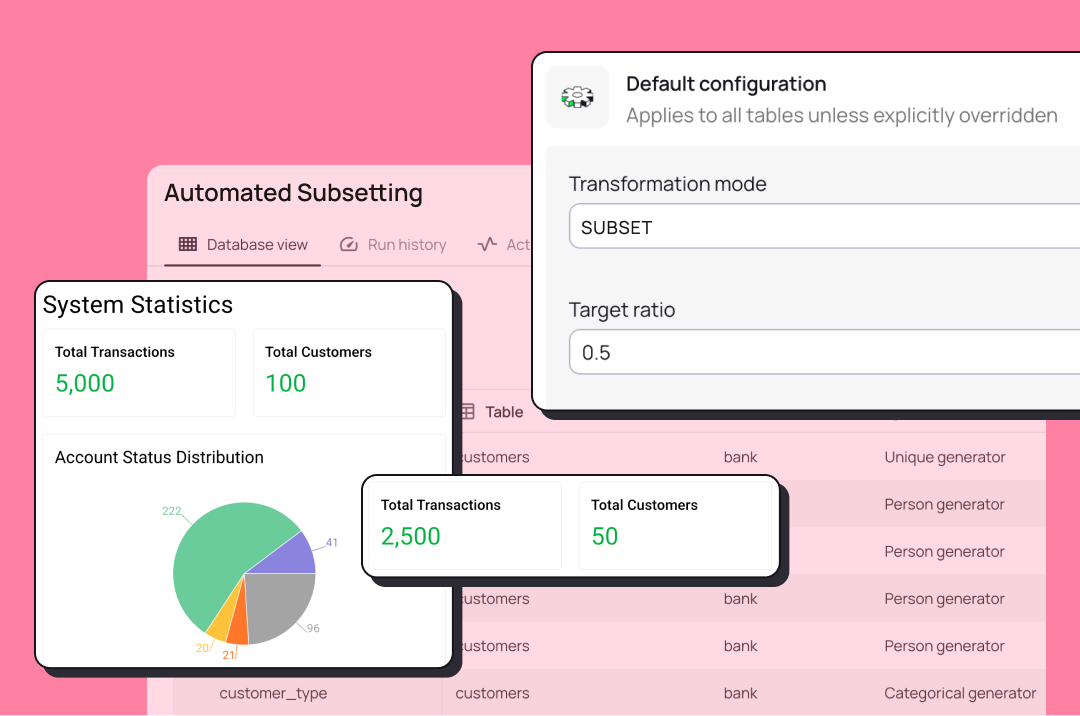
Choose company codes, date ranges or business objects, and the subset keeps every related record so tests still run end to end.
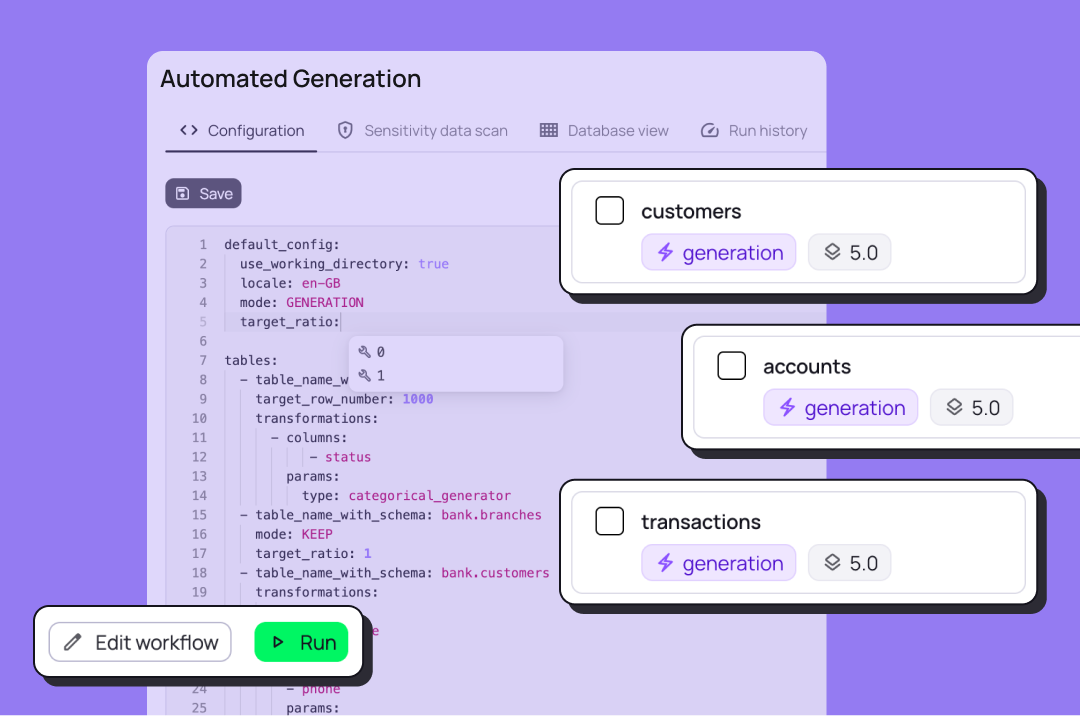
Generate customers, orders and edge cases for scenarios production doesn't contain yet, configured as code or in the UI.
EU AI Act
For high-risk AI systems, the AI Act sets rules for the data used to train, validate and test them. Most finance and logistics agents won't be high-risk; AI used in recruitment or to manage employees can be.
Regulation (EU) 2024/1689 · Article 10Training, validation and testing data sets meet quality criteria for their purpose.
They are relevant and sufficiently representative and, as far as possible, free of errors and complete.
Special categories of personal data are used only exceptionally, with safeguards, for detecting bias.
Paraphrased. The dates for high-risk obligations are under review; check the current timeline.
Read the source: Regulation (EU) 2024/1689 (AI Act) on EUR-Lex


We've got you covered

Joule works on the data in the SAP system it's connected to, so test it in a non-production system that holds masked, realistic data. Reset that data before each run and compare the results across runs.
Copying production into an agent test system puts real personal data into prompts, traces and logs. Masked data that keeps the business process intact gives the same coverage without that exposure.
Agents change what they act on. Without a reset, the second run starts from a different state, and you can't tell whether a difference came from the agent or from the data.
Only if an agent counts as high-risk, for example in recruitment or employee management. Then it sets rules for training, validation and testing data. Your legal team decides, and the dates are under review.
No. The masking and generation engine runs in your environment and gives the same output for the same input. The optional AI assistant can be switched off, so nothing calls out.
Next step
We prepare one masked agent test system for a process you choose, and show a reset between two runs.
SAP, S/4HANA, SAP HANA, SuccessFactors, Ariba, Concur and other SAP products and services mentioned herein, as well as their respective logos, are trademarks or registered trademarks of SAP SE (or an SAP affiliate company) in Germany and other countries. All other product and service names mentioned are the trademarks of their respective companies.

