TL;DR
- Enterprise test data estates often grow tool by tool, leaving separate processes for copying, masking, synthetic generation, provisioning, and individual applications.
- The problem isn't necessarily whether each tool works. It's whether the complete test data lifecycle works together.
- Fragmentation introduces handoffs, duplicated configuration, inconsistent governance, and difficulty maintaining meaningful data across connected systems.
- As testing becomes more automated and business processes span more applications, those gaps become harder to manage.
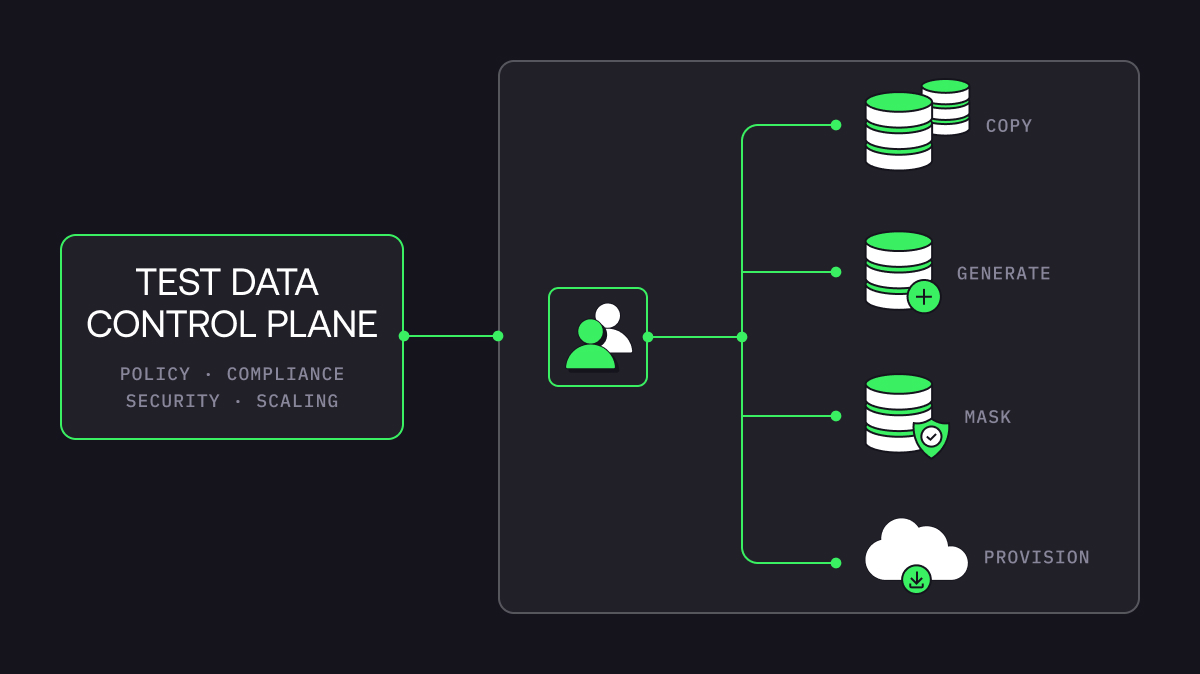
- A unified control plane gives enterprises one place to automate and govern test data operations across SAP and non-SAP environments without requiring every underlying system to work in the same way.
Enterprise technology rarely becomes fragmented because somebody designed it that way. More often, fragmentation is the result of solving individual problems as they appear.
A database needs to be copied into a test environment, so a tool is introduced for that. Production data contains sensitive information, so masking technology is added. A team needs data that production can't provide, which creates a requirement for synthetic data generation. SAP has its own test data requirements, while other applications and databases are managed separately again.
Each decision makes sense in isolation. Over time, though, an enterprise can end up with a collection of tools that perform individual test data operations without providing a coherent way to manage the lifecycle around them.
That distinction matters increasingly as software testing becomes more automated and more interconnected. The challenge for enterprise TDM is no longer simply whether an organization can copy, mask, generate, or provision data. It is whether all of those operations can work together reliably enough to support testing across the business.
Point solutions solve point problems
There is nothing inherently wrong with specialist tooling. Many existing TDM architectures were built at a time when the primary requirement was to solve a specific operational problem: create a smaller copy of a large database, remove sensitive information from production data, or refresh a particular test environment.
The limitations emerge between those individual operations.
If data is copied using one system, masked through another, subsetted according to rules maintained somewhere else, and provisioned through a separate workflow, every transition has to be coordinated. Configuration gets duplicated, ownership becomes less clear, and changes in one part of the process can affect another without being immediately visible.
For example, a regulated enterprise might use one tool to copy production data into a test environment, another to mask sensitive information, and a third to subset the resulting dataset for a specific test scenario. Each operation may work as intended, but the team still has to coordinate the handoffs between them, including making sure the right version of the data has been masked and that the subset is based on the correct source.
This can also make test data surprisingly difficult to automate end to end. An organization may have automated database copying and automated masking, for example, while a manual handoff between the two still determines when a test environment becomes available.
At enterprise scale, those gaps accumulate. Instead of managing one test data lifecycle, teams are effectively coordinating several processes and hoping they continue to behave like one.
Fragmentation becomes a governance problem
Operational complexity is only one part of the issue. Fragmentation also makes it harder to answer basic governance questions consistently, particularly in regulated environments where frameworks such as the Digital Operational Resilience Act (DORA) and PCI DSS place clear expectations around the protection, management, and control of sensitive data and systems.
Where is sensitive data being used in non-production environments? Which masking policies were applied? When was a dataset created? Which teams have access to it? Are the same privacy and security rules being enforced across applications?
When test data operations are distributed across multiple technologies, the answers can also be distributed. One system might have detailed audit information for masking while another controls provisioning and access. Different teams may maintain different definitions of sensitive data or implement equivalent policies in different ways.
This is particularly difficult in large organizations where application estates cross business units, geographies, regulatory requirements, and technology generations. Governance has to apply across that complexity rather than only within the boundary of whichever tool happens to be operating on the data at a particular moment.
Bringing test data operations under a common control plane allows policies to be applied as part of the lifecycle itself. Sensitive data discovery, masking, provisioning, and access no longer need to be treated as unrelated governance events.
Enterprise tests don't respect application boundaries
Fragmented TDM becomes even more difficult when the thing being tested is not an application but a business process.
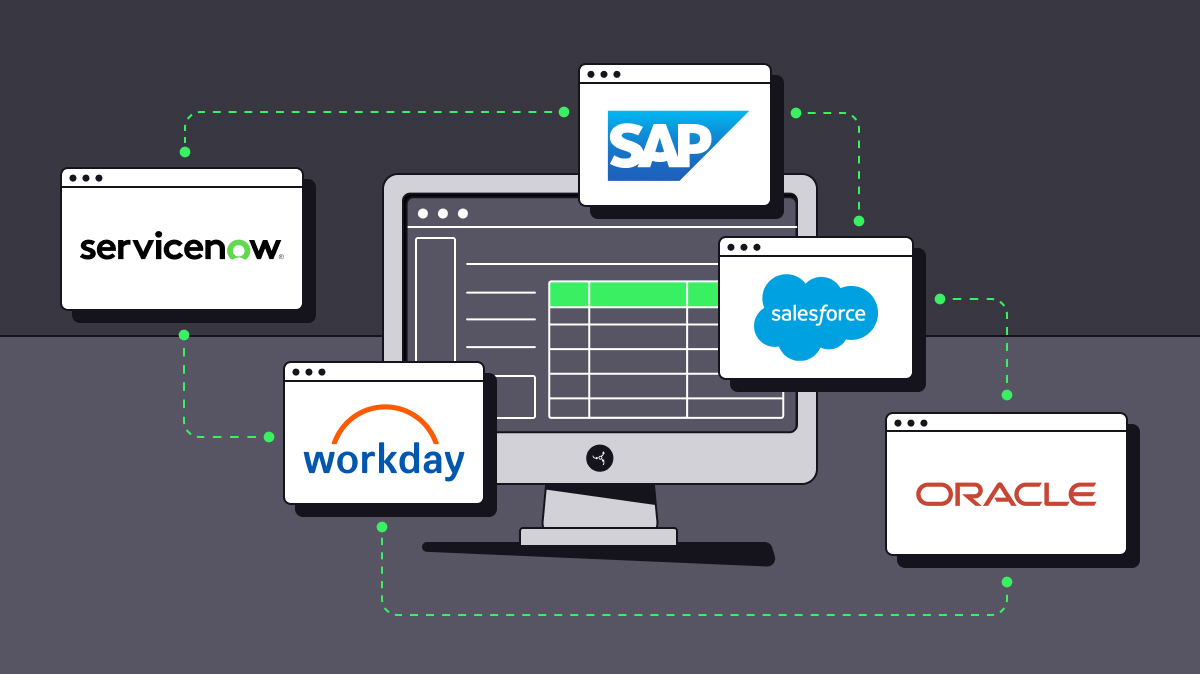
Modern enterprise processes routinely cross several systems. An Order-to-Cash journey might begin in a CRM, move through SAP, interact with payment or logistics services, and ultimately feed downstream reporting and analytics. The applications are separate, but the business process isn't.
Test data has to reflect that.
It isn't enough for each individual environment to contain technically valid records. The relationships between those records have to remain meaningful as a transaction moves from one system to another. A customer, order, payment, shipment, and invoice need to describe the same business scenario wherever they appear.
Application-specific TDM approaches can make this difficult because each tool sees only part of the process. Teams may successfully prepare data inside individual systems and still find that an end-to-end test fails because the datasets don't correspond across application boundaries.
For enterprise testing, referential integrity increasingly has to be considered at the level of the business process rather than only within an individual database.
Test automation exposes the weakest handoff
Fragmentation can remain manageable while humans are coordinating the testing process. People are good at compensating for awkward systems: they chase requests, rerun jobs, correct configuration, move files, and work around environments that aren't quite ready.
Automation is less forgiving.
A test automation pipeline depends on the steps beneath it being repeatable and available programmatically. If a regression suite is ready to execute but the required dataset is waiting for a manual refresh, the pipeline is still constrained by that refresh. The fact that everything after it is automated doesn't remove the dependency.
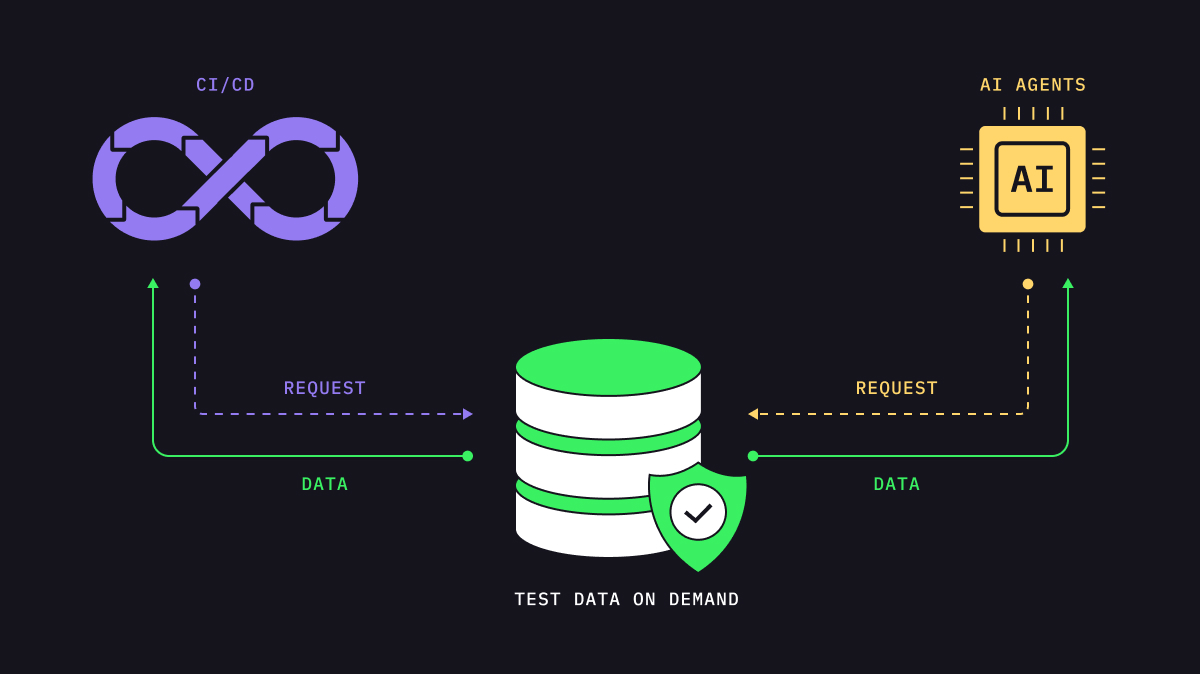
The same becomes true as AI agents take on more activity within development and QA. Agents can generate tests and initiate workflows continuously, but they still need access to suitable data. That data needs to be available on demand, at machine speed, and within the policies governing how sensitive data can be used. In an agentic workflow, there may be no human in the loop to spot that the required data is missing, non-compliant, or unsuitable for the scenario being tested.
A fragmented supply chain forces the automation layer to accommodate the operational limitations of every individual TDM system underneath it. This is why test data automation has to mean more than automating isolated operations. Generation, copying, masking, subsetting, provisioning, and refresh need to operate as parts of the same automated lifecycle.
One control plane doesn't mean one type of system
A unified approach to TDM can sound unrealistic when the underlying enterprise environment is anything but unified. Large organizations may have SAP and non-SAP applications, relational databases, cloud platforms, legacy systems, custom applications, and SaaS products, each with different technical requirements.
A control plane doesn't need to make those systems identical. Its purpose is to provide a common way to govern and orchestrate test data operations across them.
The underlying operation can still reflect the requirements of the system involved. Some situations may require intelligent copying or subsetting, while others are better served by synthetic generation. Sensitive information may need to be discovered and masked, while a performance test may require a large production-realistic dataset generated at scale.
What changes is the layer from which those operations are managed. Instead of maintaining separate test data workflows for every technology, teams can define how data should be generated, protected, provisioned, and refreshed through a common platform.
That creates consistency without pretending the enterprise itself is homogeneous.
From tool consolidation to business assurance
The case for unified TDM isn't ultimately about having fewer tools on an architecture diagram. Consolidation may reduce operational overhead, but the more important outcome is confidence in the testing process, and the time saved by removing delays from the test data lifecycle.
When test data operations are connected, teams can maintain relationships across applications, apply governance consistently, and provide data continuously to automated testing. Instead of waiting for separate requests, refreshes, masking jobs, or provisioning steps to complete, teams can move from a testing requirement to a usable environment with fewer manual handoffs. That can reduce the cycle time between preparing a test and actually running it, particularly where the same data operations are repeated across teams and environments.
This becomes especially important for business-critical processes where a technically successful test inside one application says relatively little about whether the complete transaction will work once it crosses the wider enterprise landscape. Delays in test data preparation can hold up environments, extend testing cycles, and ultimately push releases further out.
Test data should help organizations test those processes as they actually operate. Achieving that requires visibility and control beyond individual tables, databases, applications, or TDM functions.
Enterprise TDM needs to work as one system
Enterprises will always have heterogeneous technology estates. The goal of modern TDM isn't to remove that complexity, but to prevent the test data layer from adding another layer of fragmentation on top of it.
That means moving away from a model where every data operation or application creates another isolated workflow. Copying, masking, generation, subsetting, provisioning, refresh, privacy, and governance all contribute to the same test data lifecycle and increasingly need to be managed that way.
As testing becomes more continuous and business processes become more interconnected, the cost of coordinating fragmented TDM increases. A unified control plane gives enterprises a way to manage that complexity while providing teams and automated systems with consistent access to the data they need.
For enterprise TDM, the question is becoming less about how many individual test data capabilities an organization has and more about whether those capabilities can operate together.
See how Synthesized unifies test data operations across SAP and non-SAP environments on one control plane. Book a demo to learn more.