TL;DR
- Most enterprise processes today run across multiple systems: core platforms, CRMs, payment processors, and specialist applications working together
- Cross-system test data brings a cluster of distinct challenges that compound each other over time
- These include data that doesn't match, ownership that's split, and a scale problem no manual process can fix
- This shows up across industries in different specific systems, but the underlying causes are consistent
- Fixing it means building referential integrity in at the point data is generated, not reconciling it afterward
Ask a QA lead in almost any large enterprise where their most stubborn defects come from, and a familiar answer emerges. Not from any single system misbehaving. From the point where two or three systems are supposed to agree with each other, and don't.
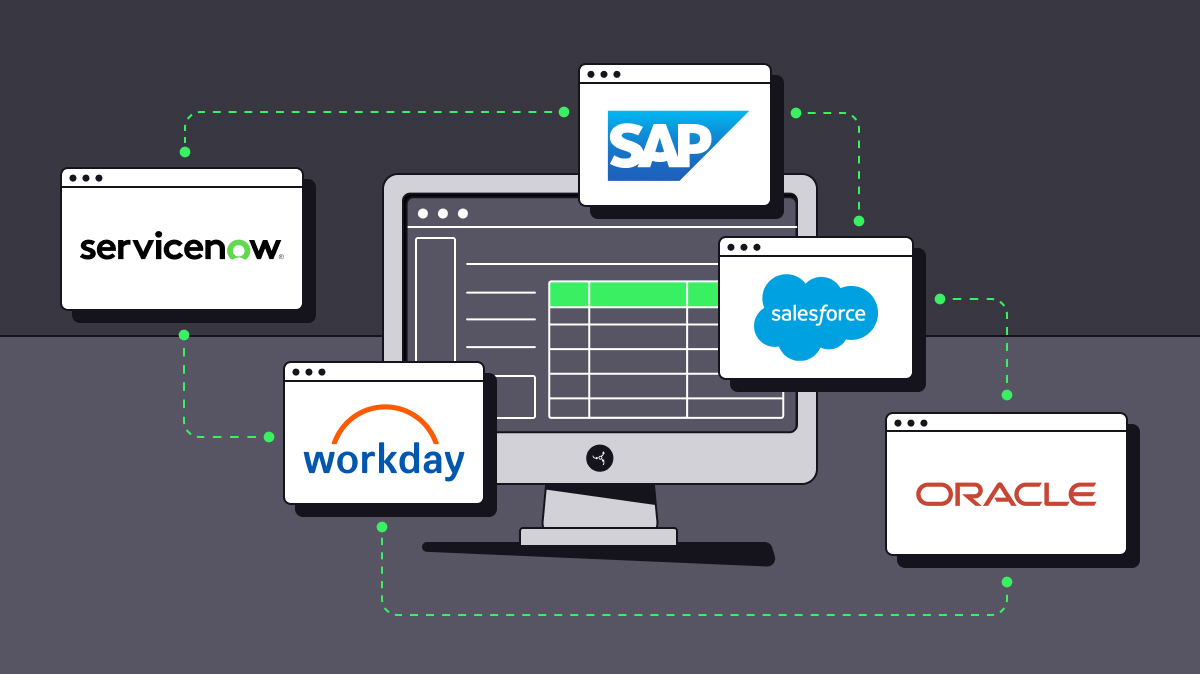
That's the cross-system problem, and it shows up in some form across almost every complex enterprise ecosystem, whether the core platform is SAP, a banking core system, a claims platform, or an electronic health record system. What's less well understood is that this isn't one problem. It's several distinct challenges that compound each other, and most testing programs are only solving for one or two of them at a time.
Why modern business processes span multiple systems
A single business process rarely stays inside a single system anymore. A customer onboarding journey might start in a CRM, touch a core banking or policy administration system, run through a document management platform, and post to a general ledger. A claims process in insurance might span a front-end portal, a claims engine, a fraud detection model, and a payments system. In healthcare, a patient journey can touch scheduling, clinical records, billing, and insurance verification, often across systems from entirely different vendors.
Each of those systems typically has its own approach to test data, its own team, its own tools, its own schedule. In isolation, each team can point to passing tests and reasonably believe their part of the process works. The problem only becomes visible when everything runs together.
Five challenges of cross-system test data management
Cross-system test data alignment breaks down for five distinct reasons, and they tend to reinforce one another rather than sit in isolation.
1. Different systems speak different data languages
A customer ID in a CRM often isn't structured the same way as a customer ID in a core banking or ERP system. Field lengths differ, formats differ, sometimes the same entity is identified by a completely different key in each system. Aligning test data across systems means solving this translation problem before anything else, and most teams solve it manually, once, and let it quietly drift out of date.
2. Ownership is fragmented across teams that don't talk to each other
The team responsible for the CRM's test data usually isn't the team responsible for the core platform's test data, and neither reports to whoever owns the payments or claims system. Each team optimizes for their own system passing its own tests, because that's what they're measured on. Nobody owns the space between systems, which is exactly where this problem lives.
3. Refresh schedules rarely line up
One system might refresh its test data weekly, another monthly, another only when someone remembers to. The moment those schedules diverge, so does the data. A customer that exists in one system's fresh dataset may already be missing or altered in another system still running last month's snapshot.
4. One compliant system doesn't mean a compliant whole
Masking that works perfectly well in one system can fall apart the moment its data gets correlated with a second or third system, even if every individual system passes its own compliance check. This is a real risk that doesn't get enough attention, especially in healthcare and financial services, where combining several partially masked datasets can rebuild someone's identity even when none of them do it alone.
5. Scale makes manual reconciliation genuinely impossible
A process touching two systems is hard enough to align by hand. A process touching four or five, which is increasingly normal, makes manual reconciliation a full-time job that still won't keep pace with how often any of the underlying systems change.
How cross-system test data issues affect enterprise testing
When these challenges go unaddressed, a specific and familiar failure pattern emerges. Integration tests pass, because each system is being tested against data that makes sense within its own boundaries. But the data across systems doesn't actually correspond, a claim number generated in one system was never propagated to the one downstream, a patient record updated in one place doesn't reflect in another.
A test passing tells you almost nothing about whether the process works end to end, and that gap is exactly where things go wrong. The defect doesn't show up until UAT, or worse, production, by which point it's expensive to fix and impossible to hide.
Cross-system test data challenges across industries
SAP environments run into this through Order-to-Cash or Procure-to-Pay, which cross the core ERP, CRM, procurement, and logistics platforms. In banking, it shows up across core banking, digital channels, and payments infrastructure.
Insurance sees it most in claims processing, where a claim moves through policy administration, fraud detection, and payment systems, none of which were designed with each other's test data in mind. In healthcare, it turns up in patient journeys that span clinical, administrative, and billing systems, frequently under strict data protection rules.
Different industries, different specific systems, but the same five underlying challenges every time.
How to maintain referential integrity across enterprise systems
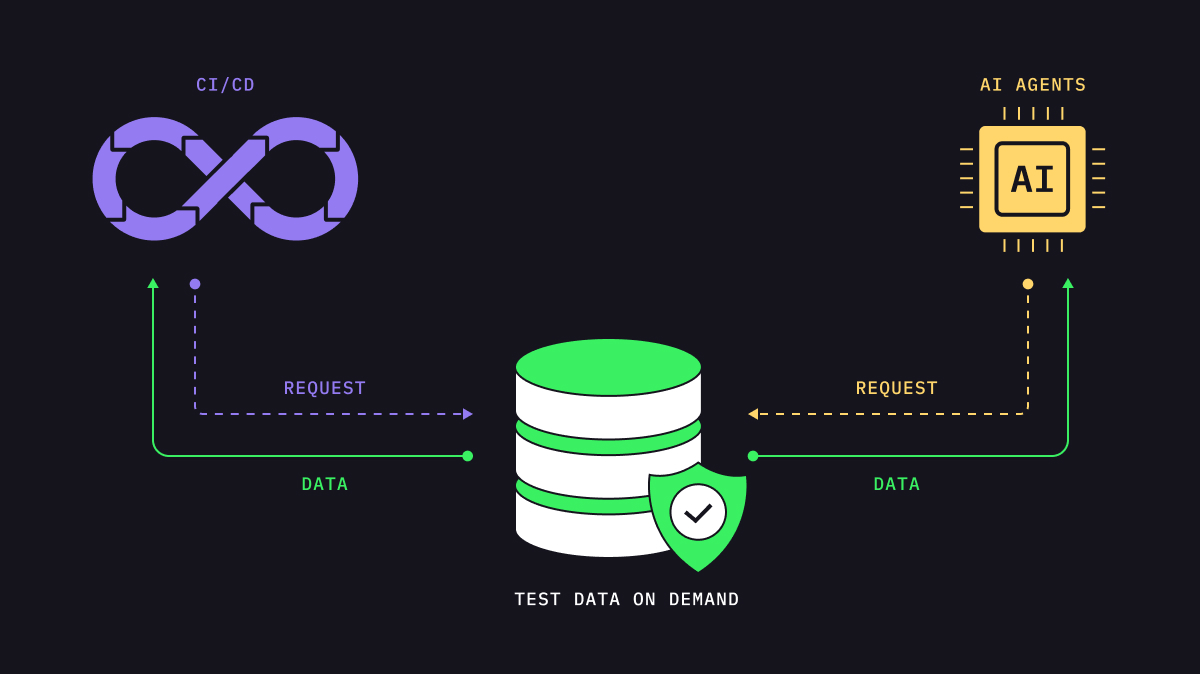
Solving this well requires treating relationships across systems as a first-class concern, rather than something to reconcile after tests fail. Data mismatches need to be resolved systematically instead of corrected by hand each time, with clear ownership of alignment across connected systems. Those systems also need to be provisioned on demand and in sync, avoiding the inconsistencies created by divergent refresh schedules.
Compliance risk should be assessed across connected datasets as a whole, rather than within each system in isolation. Crucially, this approach has to scale as more systems become part of the process, because manual reconciliation quickly becomes unsustainable as the environment grows.
The organizations that solve this stop discovering cross-system defects in UAT, and start catching them far earlier, because the data was never allowed to drift apart across systems in the first place.
Want to see what consistently aligned test data across your enterprise systems actually looks like? Book a demo and find out how Synthesized keeps every connected system working from the same referentially consistent data, on demand.