TL:DR
- Data migration and test data management solve two different problems, even though they often get bundled into the same conversation
- Migration platforms move real business data into a new production system. Test data platforms provide safe, realistic data for everything that happens before, during, and after that move
- The confusion usually comes from five practical questions: where the data lands, whether the need is finite or ongoing, whether the data must be correct or just representative, who's using it, and what happens when the project ends
- Most large transformation programs need both, and they work well together rather than in competition
Every large transformation program eventually runs into the same question: do we need a data migration tool, a test data platform, or both? The confusion is understandable. Both deal with enterprise data. Both get mentioned in the same transformation conversations. And both can, on the surface, sound like they're solving the same problem.
They're not.
What a data migration platform actually does
Data migration platforms exist to move existing business data out of a legacy system and into a new production environment. That means profiling the legacy data, mapping it to the new target system, cleansing and remediating records, running trial loads, reconciling the results, and managing the cutover itself.
The data these platforms handle has to be correct. It represents real customers, real transactions, real financial records. Success is measured in reconciliation accuracy, data quality, and a clean cutover.
This is precision work with a clear endpoint. Once the data has landed correctly and been signed off by the business, the migration is largely done.
What a test data platform actually does
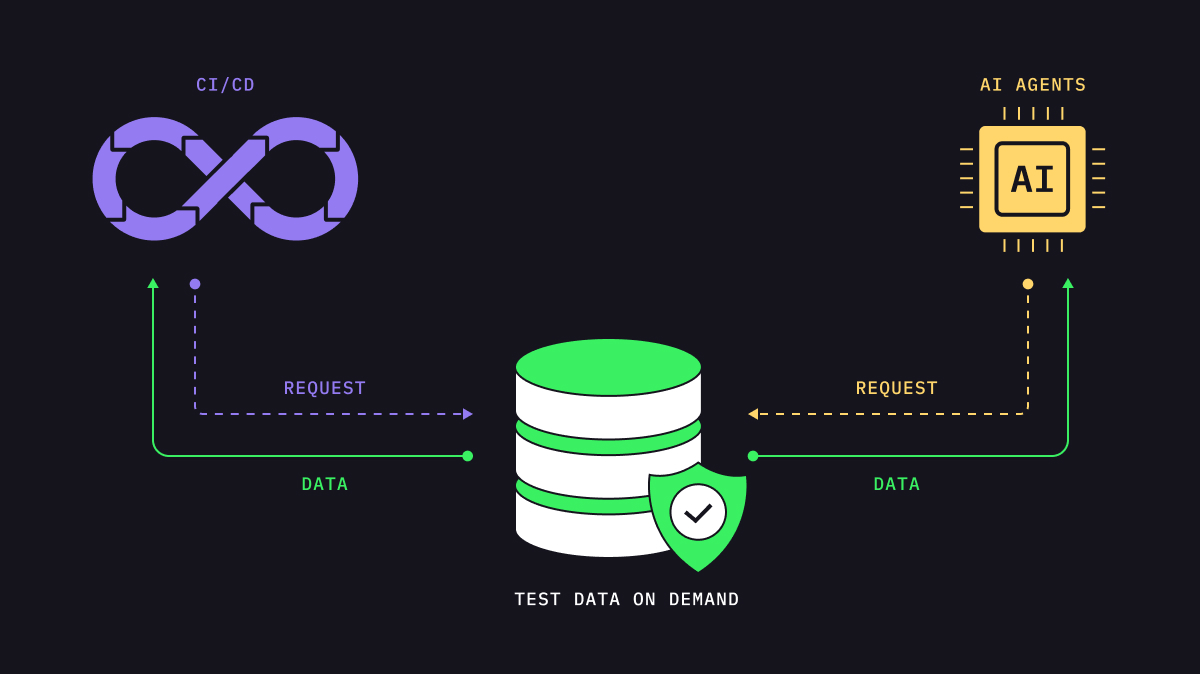
Test data management solves a different problem entirely. Rather than moving real data into production, it provides data for everything that isn't production: development, QA, UAT, performance testing, training environments, and increasingly, AI and agentic testing pipelines.
That data needs to be realistic enough to test against, but it explicitly cannot be the real thing. So test data platforms mask sensitive fields, generate synthetic data for scenarios that don't exist yet in any system, subset large datasets into right-sized environments, and provision all of it on demand rather than on a schedule.
Unlike migration, this isn't a project with an end date. It's a continuous capability a program needs before go-live, during go-live, and for every release that follows for as long as the application is in use.
Where the confusion actually comes from
The overlap that trips people up is masking. Migration and data quality platforms often include masking features as part of their own workflows, which makes it reasonable to ask why a separate test data platform is needed at all.
The answer is scale. A migration platform masks data as one step in a broader data quality process tied to a specific transformation project. A test data platform is built around continuously provisioning safe, compliant, right-sized, and even synthetic data across every non-production environment for as long as that program exists, not just during the migration window.
Five questions that clarify which one you need
Where does the data land? Production and cutover activity points toward migration. Any non-production environment points toward test data management.
Is there a fixed go-live date, or is this an ongoing need? Migration work is finite. Test data needs recur every sprint and every release, long after go-live.
Does the data need to be factually correct, or does it need to be safe and representative? Migration data must reconcile accurately. Test data needs to behave like production without being production.
Who is actually using it? Migration typically involves transformation, data, and business teams. Test data typically involves QA, engineering, and DevOps teams.
Once the project ends, does the need disappear? If yes, that's migration. If it continues indefinitely, that's test data.
Why most large programs need both
Migration mappings need to be tested using safe data before they're trusted with real records. Parallel test environments often run for many months before go-live, all requiring their own governed, compliant datasets. Offshore teams and third-party implementation partners frequently can't access real production data at all. And synthetic generation can create realistic data for target-system scenarios that don't have any equivalent history in the source system yet, something a migration tool structurally cannot do since it depends on existing source records.
Once a program goes live, the need for test data doesn't disappear the way the migration project does. Release testing, regression cycles, and ongoing quality assurance continue for the life of the application.
The practical takeaway
Data migration and test data management aren't competing solutions to the same problem. They're two different disciplines solving two different risks: one protecting the accuracy of the production move, the other protecting the speed, safety, and quality of everything that happens around it.
Want to see what a dedicated test data capability looks like alongside your transformation program? Book a demo and find out how Synthesized keeps every non-production environment safe, compliant, and ready throughout your transformation, and long after go-live.