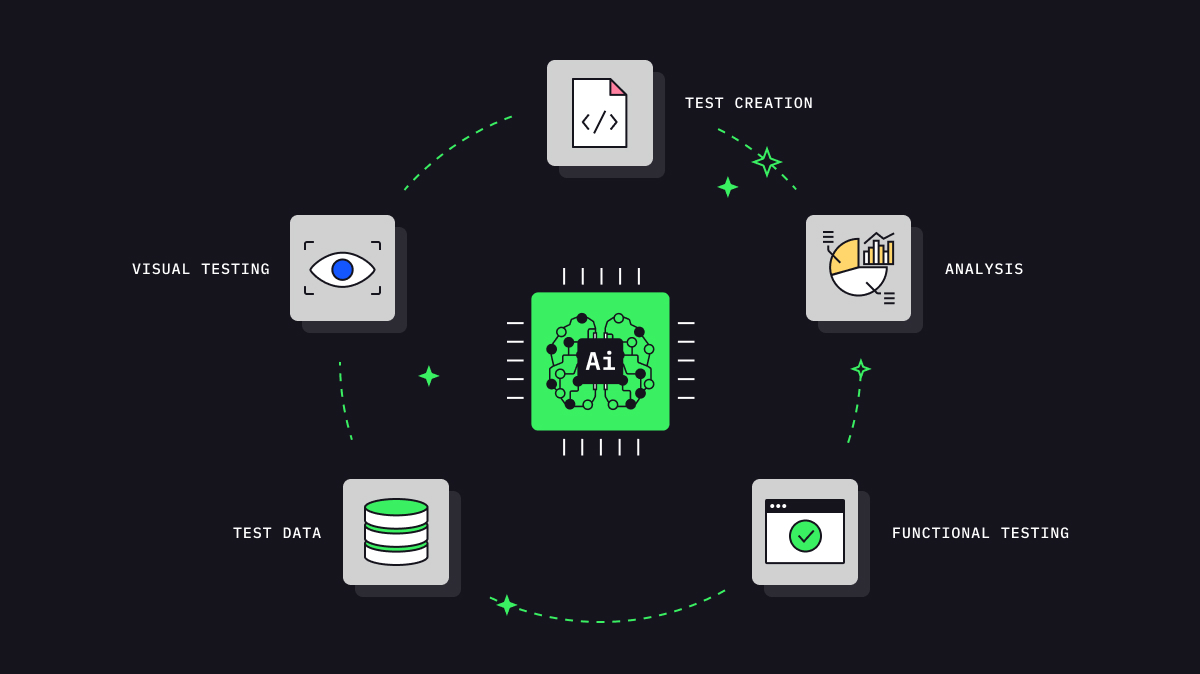
Automated testing helps teams run tests faster and more consistently. But even when test execution is automated, preparing the data those tests need can still involve considerable manual work.
A test might be ready to run in UiPath Test Cloud, but someone first needs to find suitable records, prepare the right data conditions, mask sensitive information, or provision a dataset into the test environment. If the data isn’t ready, the test has to wait.
This creates a gap in the automation process. Teams have automated test execution, but much of the preparation required to make those tests possible still happens outside the workflow.
With Synthesized and UiPath Test Cloud, teams can bring test data preparation into the automated testing process itself, reducing the need for separate manual handoffs.
The missing step in test automation
Automated tests need data that represents the conditions being tested.
A simple test might require a user account with particular permissions. A more complex test could depend on specific customer records, transaction histories, account statuses, or relationships between data held in different applications.
Those conditions aren’t always easy to reproduce.
Teams may need to search existing environments for suitable records, create missing scenarios, or refresh datasets that have changed since the previous test run. Sensitive information may also need to be masked before production-derived data can be used safely.
These activities take time, particularly when different tests require different data states.
The challenge becomes more noticeable as automated test suites grow. A test may be ready to execute, but its success still depends on whether the environment contains the right data.
When preparation remains manual, test automation inherits those delays.
Make data preparation part of the workflow
A more effective approach is to treat test data preparation as a defined step in the automated testing workflow.
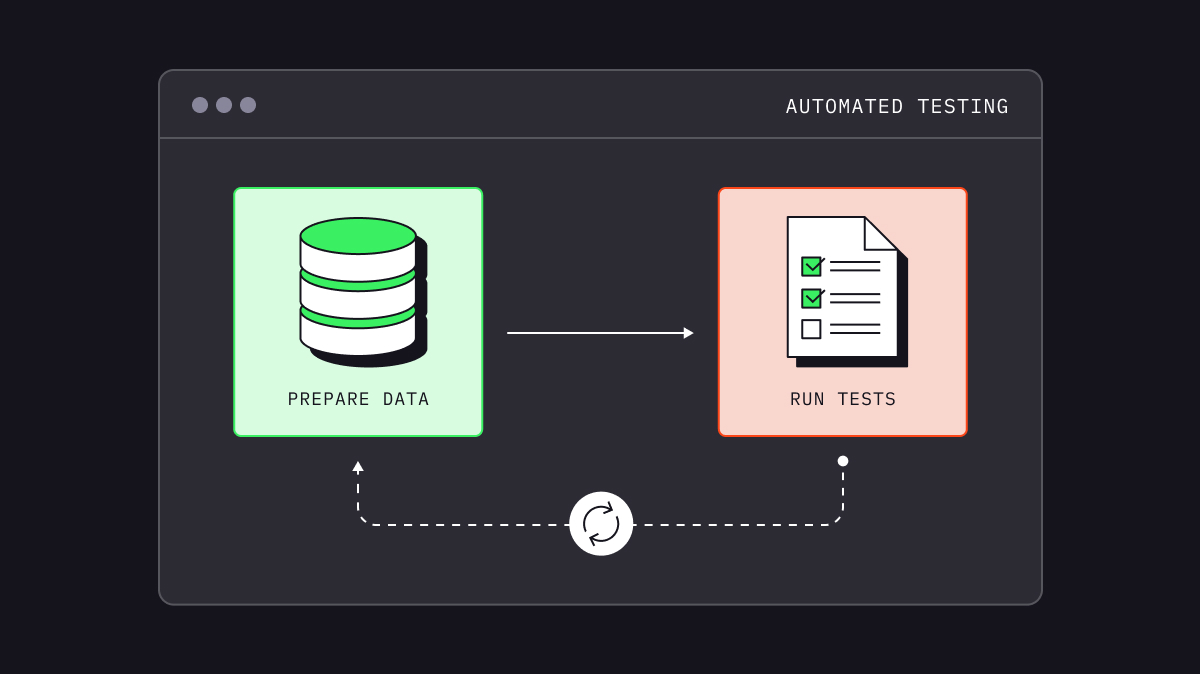
Instead of preparing a dataset separately and then starting a test run, the workflow handles both activities in sequence.
For example, a workflow can:
- Identify the test scenario and its data requirements.
- Trigger the appropriate data preparation process.
- Provision the prepared data into the test environment.
- Execute the automated tests.
- Review the results and repeat the process when needed.
This changes how teams manage test readiness.
Rather than assuming suitable data will be available when a test starts, the workflow includes the steps needed to prepare it.
It also makes preparation easier to repeat. Teams can reuse established data workflows instead of rebuilding datasets manually for every test cycle.
How Synthesized and UiPath work together
UiPath Test Cloud provides capabilities for designing, managing, and executing automated tests. Synthesized supports the test data operations those tests depend on.
Through the Synthesized Connector available in the UiPath Marketplace, teams can incorporate Synthesized data workflows into their UiPath automation processes.
Depending on the testing scenario, Synthesized can be used to:
- Subset data: Extract relevant records while preserving the relationships needed for testing.
- Mask sensitive information: Protect confidential data while keeping records usable.
- Generate synthetic data: Create scenarios that are difficult to find in existing datasets, including edge cases and negative tests.
- Provision test data: Make prepared datasets available in the target environment before execution.
The value comes from connecting these capabilities to the testing workflow.
A UiPath workflow can trigger the appropriate Synthesized preparation steps before executing the tests that depend on the resulting data.
Instead of separate activities managed by different people or processes, data preparation and test execution become stages in an orchestrated workflow.
More dependable regression testing
Regression testing is particularly dependent on repeatable conditions.
Teams need to check whether existing functionality still works after application changes. But when tests rely on shared or manually maintained datasets, the underlying data may change between runs.
A record might be updated by another test. A required relationship may be missing. An account might no longer have the expected status.
These changes can cause failures unrelated to the application behavior being tested.
Automating data preparation doesn’t eliminate every source of test instability. It does, however, give teams more control over the conditions in which tests run.
With reusable Synthesized workflows, teams can prepare the data required for particular scenarios more consistently across test cycles.
This also helps with troubleshooting. When preparation follows a defined process, it’s easier to investigate whether a failure relates to application behavior or the data available during execution.
Supporting end-to-end enterprise testing
Enterprise testing often involves processes that span several applications.
An automated workflow might move between an ERP system, a CRM application, and other connected services. The test steps can be automated, but the underlying data must still represent a coherent business process.
Customer identifiers need to match across systems. Transactions must reference valid records. Related data needs to remain consistent.
Preparing data independently for each application can introduce mismatches that prevent tests from reaching the intended scenario.
Synthesized supports test data management across SAP and non-SAP environments, helping teams prepare connected datasets for processes that cross system boundaries.
Incorporating those preparation steps into a UiPath workflow helps align automated execution with the data conditions required across the applications involved.
This is especially important for end-to-end testing, where a successful result depends on more than an individual application working in isolation.
Automate the tests. Automate the data.
For teams investing in test automation, data preparation is an important part of the workflow to examine.
If automated tests still depend on someone manually finding records, masking information, or rebuilding scenarios before every run, a significant part of the process remains outside automation.
Synthesized and UiPath Test Cloud help connect those activities. Synthesized prepares and provisions the data, while UiPath manages and executes the automated tests.
The aim is to make test data preparation a repeatable part of the testing process rather than a separate task that has to be completed before automation can begin.
Automating test execution is one part of the equation. Automating the data preparation that makes those tests possible is the other.