
TL;DR
- Most S/4HANA migrations run significantly over time and budget, and the causes are consistent across programs
- Scope creep, data problems, and testing delays account for the majority of overruns
- Test data is one of the most common contributors and one of the least planned for
- There are practical things program teams can do differently that make a material difference
- Getting test data right is one of the highest-leverage fixes available
Six out of ten S/4HANA migrations exceed their planned budget. The average project takes 30% longer than expected. Only 8% finish on time.
Those numbers come from a 2025 Horváth study of 200 SAP user companies. They'll be familiar to anyone who has sat in a program steering meeting and watched the go-live date move for the third time.
Research from ISG tells a similar story. Nearly 60% of SAP migration projects end up delayed, over budget, or both. The culprits aren't technical failures. Their scope expanded without anyone quite deciding to do so, the complexity was underestimated in the planning phase, and internal constraints that nobody had fully mapped out before the work started.
If your migration feels like it's been running forever, you're not alone. And more to the point: the reasons are usually the same ones that slow every other program down.
What actually causes migrations to drag
Ask program managers who have been through difficult S/4HANA migrations where the time went. The answers cluster around a handful of themes.
1. Scope that keeps moving.
Fit-to-standard workshops surface new requirements. Business stakeholders change their minds. Customizations that were supposed to be retired get reinstated. Every change adds rework, and rework adds weeks.
2. Data that isn't ready when it's needed.
A poorly managed data transition is one of the leading reasons S/4HANA migrations exceed their planned timelines. This covers data migration — getting records from ECC to S/4HANA accurately — but it also covers test data, which is a different problem that gets far less attention.
3. Testing phases that take longer than planned.
Environments that aren't ready when testing begins. Regression cycles are running on data that doesn't reflect the current configuration. Integration tests that break for data reasons rather than application defects, and take days to diagnose. Each of these is a schedule hit. They compound.
4. Resources are stretched too thin.
Finding experienced S/4HANA specialists is genuinely hard right now. By 2026, demand for skilled resources in data migration, finance, testing, and cutover has outpaced supply on most programs. When the people who know the system best are overcommitted, decisions take longer, quality suffers, and the schedule slips in ways that are hard to recover from.
The test data problem specifically
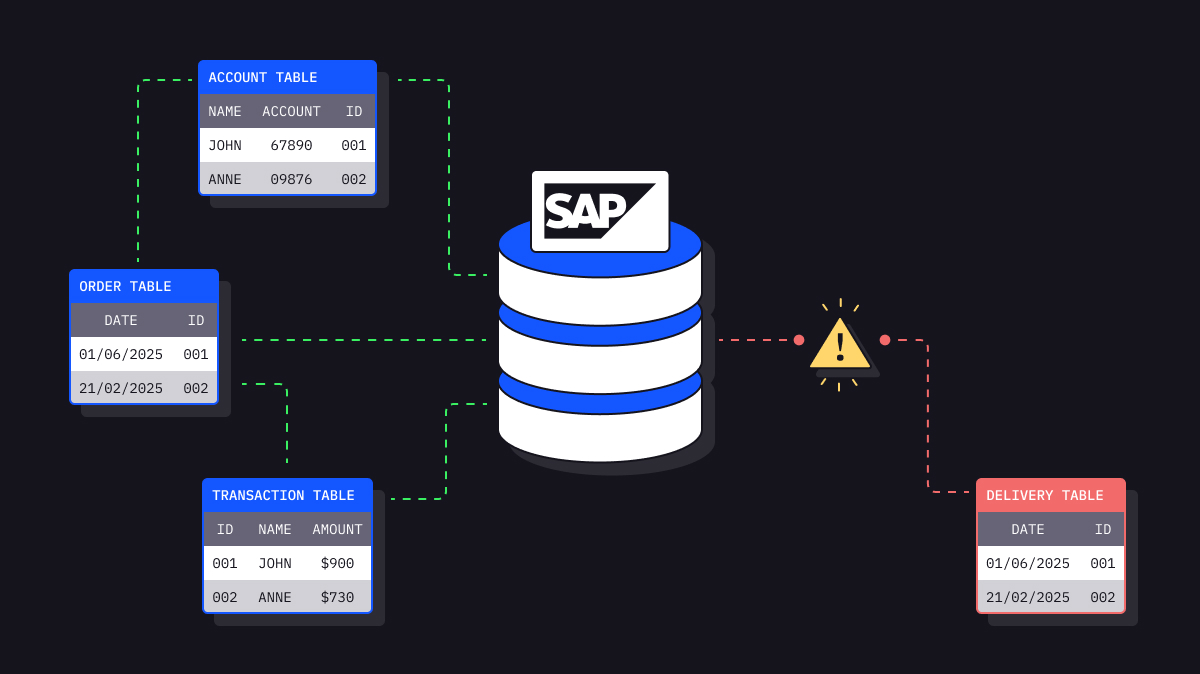
Most S/4HANA program plans have a data migration workstream. Fewer have a test data workstream. The assumption is that test data will be sorted out when testing starts, usually by pulling a copy from production and masking it manually.
That assumption costs programs weeks.
A full client copy from production takes hours to days, depending on volume. Post-copy activities — masking, configuration validation, user setup, integration checks — add more time. By the time the environment is ready, it's already drifting from the current configuration because the program kept moving while the copy was running.
Then configuration changes. The environment needs refreshing. The whole process starts again.
A separate 2026 survey by Precisely and ASUG found that 30% of SAP migration projects are either delayed or over budget, even among organizations actively in motion. In many of those programs, test data preparation is sitting somewhere in the gap between what was planned and what's actually taking time.
What helps
There's no magic answer. But there are things that consistently make a difference.
1. Test data needs its own plan.
Not a paragraph in the testing strategy; It's own workstream, with an owner, compliance requirements defined upfront, and a provisioning approach decided before Realize begins. It sounds administrative. The programs that skip it feel the consequences directly.
2. Not every test needs a full production copy.
It's the default for many programs, and it's usually more than necessary. Unit tests and string tests work fine on scenario-specific subsets. The overhead of a full copy, the time, the storage, the compliance exposure, isn't justified for most of what happens in Realize. Save it for the scenarios where production volume genuinely matters.
3. Align test data to configuration changes in real time.
Static datasets aged against a moving configuration produce false results. Tests that pass against last week's data can fail against this week's. The closer the test data is to current production conditions, the more reliable the results, and the less time is spent investigating failures that turn out to be data issues.
4. Start testing earlier.
Early quality engineering across every phase of the SAP Activate lifecycle helps detect defects earlier, reduce rework, and support faster delivery cycles. That shift-left principle applies equally to test data. The sooner the right data are available, the sooner real testing can start.
5. Plan cutover rehearsals with data you actually trust.
A rehearsal built on a dataset that was accurate three weeks ago, which doesn't reflect recent configuration changes, validates a scenario that doesn't exist. The go-live decision becomes harder to make, and risk shifts to hypercare rather than being resolved before launch.
What changes when test data is handled well
It's hard to pinpoint one moment when things feel different. It's more than the problems that usually show up in Realize and Deploy just don't. Environments are ready when testing needs to start. Regression cycles don't get shortened because the refresh isn't done. Integration tests fail because something is actually wrong, not because the data across systems was never aligned. Cutover rehearsals deliver results the team believes in.
The 2027 ECC maintenance deadline is closer than most programs are comfortable with. For teams still behind schedule, the window to close the gap is narrowing, and every week lost to slow environment preparation, stale data, or integration tests that break for the wrong reasons is a week that can't be recovered.
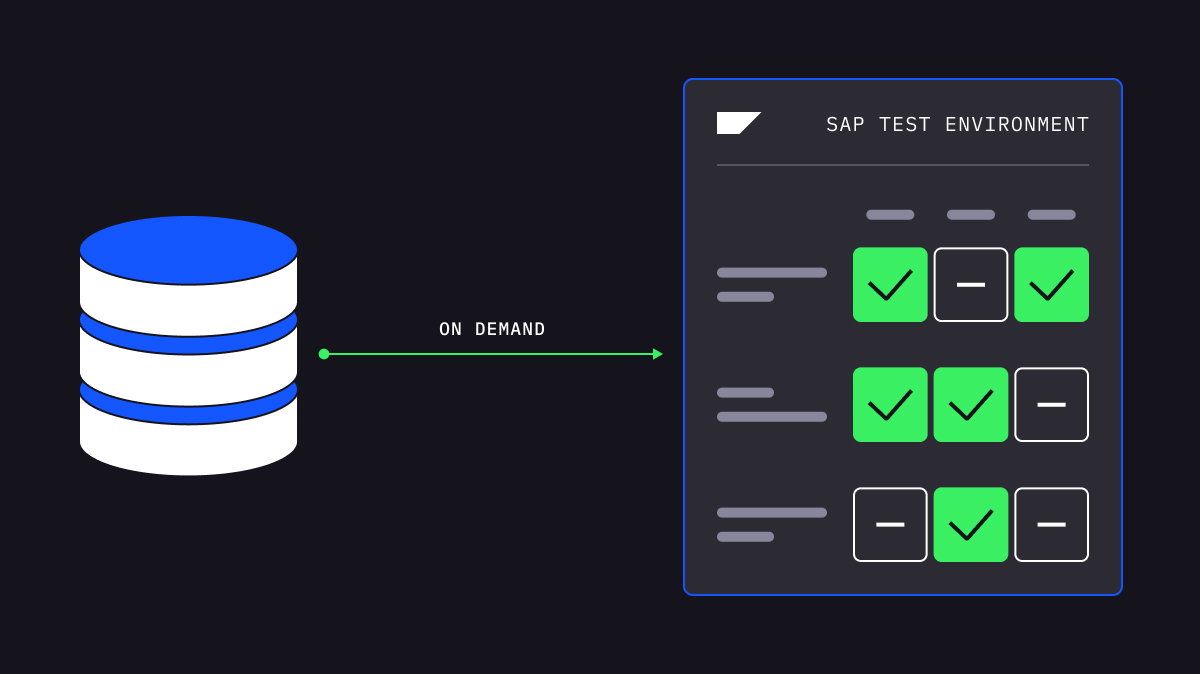
Synthesized's AI-native test data management platform gives S/4HANA program teams production-realistic, compliant SAP test data on demand, covering every generation method across SAP and non-SAP systems. Storage footprints up to 99% smaller than those of full-copy approaches. Delivery cycles up to 70% faster. What used to take four weeks and sixteen people now takes forty minutes. For a program running against a hard go-live date, that's the difference between hitting the window and missing it.
Want to see what faster SAP test data provisioning looks like in practice? Book a demo and find out how Synthesized helps migration teams test more thoroughly, go live with confidence, and stop losing weeks to test data preparation.