TL;DR
- GDPR applies to personal data in SAP test environments just as it does in production. The system type doesn't change the obligation
- SAP holds multiple categories of sensitive data beyond personal data, each with different handling requirements
- Manual masking applied after a production copy creates a compliance risk window that shouldn't exist
- Masking and scrambling applied at the point of data provisioning closes that gap
- Production data is still the right starting point for most SAP testing. The goal is using it safely, not avoiding it
Most SAP teams use production data for testing. Not because nobody has thought about the risks, but because production data is realistic. It reflects actual business transactions. It represents the complexity of real SAP processes in a way that manually assembled test datasets rarely do.
For most SAP testing scenarios, production data is the right call. The issue is what happens after the copy. More people with access, weaker controls, and auditors who are increasingly aware that non-production environments are where compliance gaps tend to hide.
What GDPR actually says about test environments
Test environments don't get a GDPR exemption. It's a surprisingly common belief that they do, and it's responsible for a lot of unprotected data sitting in systems that were never designed to hold it.
Copying data doesn't change what it is. A customer record copied from production into a test environment is still a customer record. The GDPR obligations attached to it don't disappear because the system it's sitting in has "test" in the name. Purpose limitation, data minimization, and appropriate security controls — all of it still applies. And if a regulator asks, the organization still needs to demonstrate it.
Cumulative GDPR fines have surpassed €7.1 billion as of early 2026. Regulators have broadened their focus considerably. Financial services, healthcare, manufacturing, energy; the fines are landing across all of them now. And non-production environments, historically treated as low-risk, are increasingly where auditors find what they're looking for.
What sensitive data actually looks like in SAP
One complicating factor in SAP is that sensitive data isn't limited to personal information. The compliance picture is broader than GDPR alone.
Personal data
HR modules and customer-facing systems are where most teams focus first. Payroll data, employee records, customer names, and addresses — the personal information that GDPR, CCPA, and LGPD were written to protect. It's the most visible category and usually the best understood.
Corporate compliance-sensitive data
Supplier pricing. Contract terms. Internal financial models. Intellectual property. None of it is personal data in the GDPR sense, but all of it would cause serious problems if it ended up in the wrong hands. Most organizations have internal standards for protecting this kind of information. Few apply those standards consistently to test environments.
Government-sensitive data
For organizations in defense, aerospace, and other regulated industries, ITAR-controlled data adds a third layer of obligation with serious consequences for non-compliance.
Each category requires different handling. Applying the same approach across all of them, or assuming that GDPR masking covers everything, leaves gaps.
The problem with masking after the copy
Most SAP teams that apply data protection to test environments do it the same way: copy the production data first, then run a masking or scrambling process on the copy.
The timing is the problem.
If data protection is applied after the refresh, the risk already exists. Effective SAP data scrambling must happen during the refresh itself, before data is exposed to non-production users.
Between the copy landing and the masking running, there's a gap. It might only be a few hours. But during that time, personal data is sitting in a non-production system with weaker controls than production, accessible to more people than it should be. That gap shows up in audit logs. Auditors know to look for it.
There's also the question of consistency. Manual masking rules get written for the fields that are obvious. Schemas evolve, and the rules don't get updated. New tables appear, and nobody adds them to the masking configuration. Contractors work in environments that contain data they shouldn't have access to. None of this is visible until an auditor asks for evidence of data protection controls across non-production environments.
What GDPR-safe SAP testing actually looks like
The goal isn't to stop using production data. It's to remove the compliance exposure that comes with how it's currently handled.
Masking and scrambling at the point of provisioning
Not after the copy. The data arrives in the non-production environment already protected. The exposure window closes.
SAP-aware masking
Understanding which fields can and can't be changed without breaking business logic. Country codes, configuration reference data, system-managed identifiers: these can't be scrambled without making the environment non-functional. Module-aware masking handles this automatically rather than leaving it to manual exception lists.
Custom classification rules
Most organizations have data sensitivity standards that go beyond what GDPR requires. Custom classification rules capture those standards and apply them automatically, across every environment, every time. The audit logs that result give compliance and governance teams something concrete to show when questions get asked.
Right-sized environments
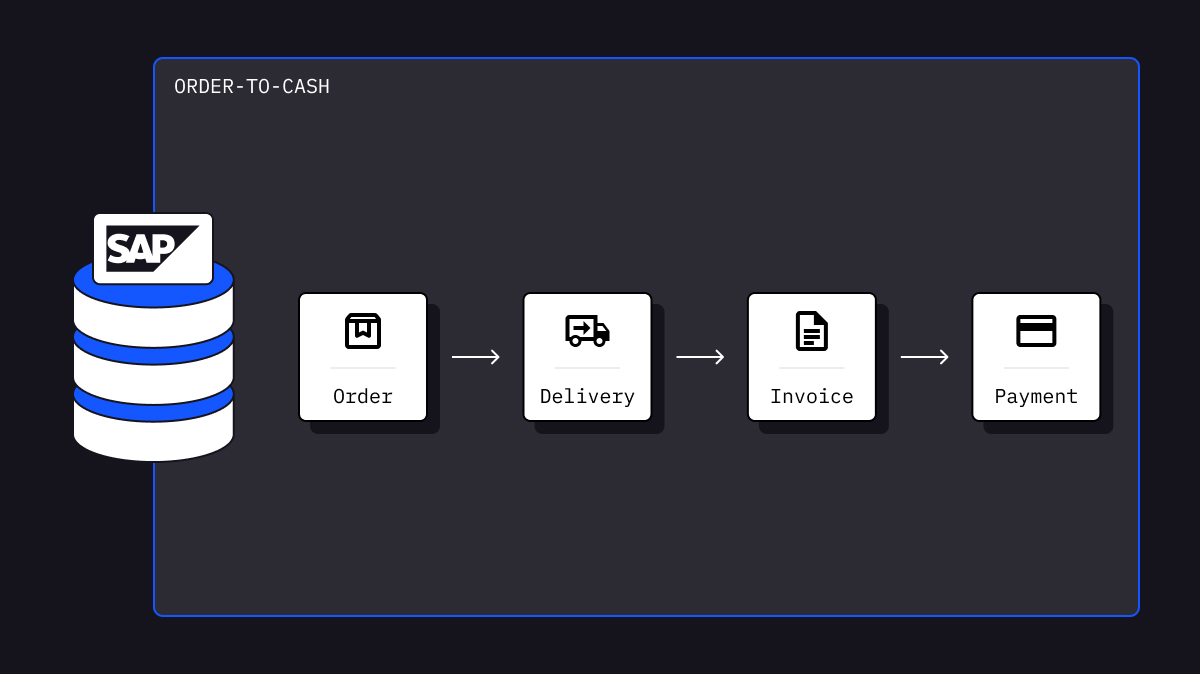
The compliance footprint of a test environment is directly related to how much data is in it. A scenario-specific subset scoped to Order-to-Cash doesn't need the full HR dataset. A string test for Procure-to-Pay doesn't need everything finance has ever posted. Right-sizing environments reduces both the compliance exposure and the time it takes to get them ready.
The teams that get this right tend to see the same things happen. Compliance risk goes down. Refresh cycles get faster. Test systems get smaller and easier to manage. And when an auditor asks for evidence of data protection controls, there's something concrete to show them.
Production data is still the right foundation for most SAP testing. The teams that use it safely have simply built the compliance controls into how it's provisioned rather than treating it as something to sort out afterward.
How Synthesized handles this
Synthesized handles data protection at the point of generation, not as a step that happens afterward. Sensitive data is discovered automatically across SAP schemas. Masking is applied with an understanding of which fields can and can't be changed.
Custom classification rules cover personal data, corporate compliance data, and government-sensitive data. Everything is logged. By the time data arrives in a test environment, it's already protected. Storage footprints up to 99% smaller than full copy approaches. Delivery cycles up to 70% faster.
GDPR compliance in SAP test environments isn't about avoiding production data. It's about removing the gaps between copying it and protecting it.
Want to see how Synthesized handles data protection in SAP test environments? Book a demo and find out how SAP QA teams get production-realistic test data without the compliance exposure.