TL;DR
- Scrambling, masking, and synthetic data generation are different approaches that solve different problems
- SAP's complexity means generic guidance on these methods often doesn't apply directly
- Scrambling and masking both start from production data; synthetic doesn't
- Most mature SAP testing programs use a combination depending on the scenario
- The right choice depends on what the test needs, what compliance requirements apply, and what production data is available
Most SAP teams reach a point where someone asks: Should we be masking our data or generating synthetic data? The question sounds simple. The answer isn't.
Scrambling, masking, and synthetic generation are three genuinely different approaches. They start from different places, produce different results, and suit different scenarios. Picking the wrong one (or treating them as interchangeable) creates problems that show up later in testing when nobody has time to fix them.
Here's how they actually work, and when each one makes sense in an SAP environment.
Scrambling
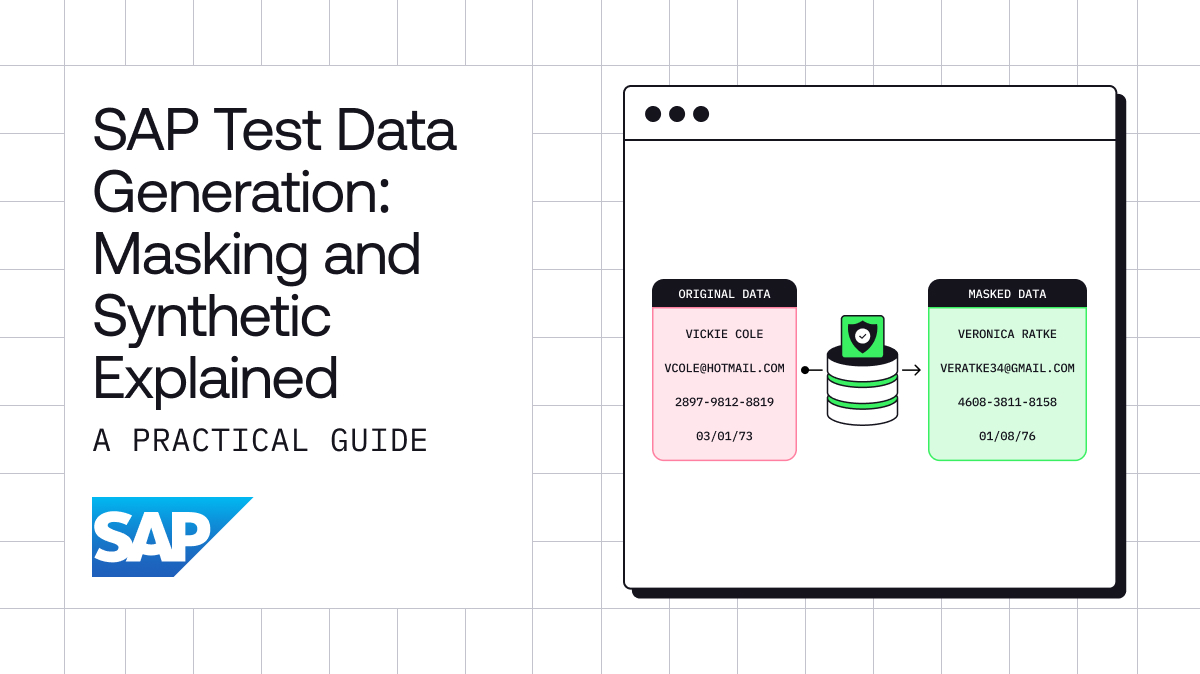
Scrambling takes production data and transforms sensitive values so they can't be identified or reversed. A customer name gets replaced with a different but realistic name. A bank account number gets shuffled. An employee ID gets substituted. The underlying data structure stays intact. The sensitive content doesn't.
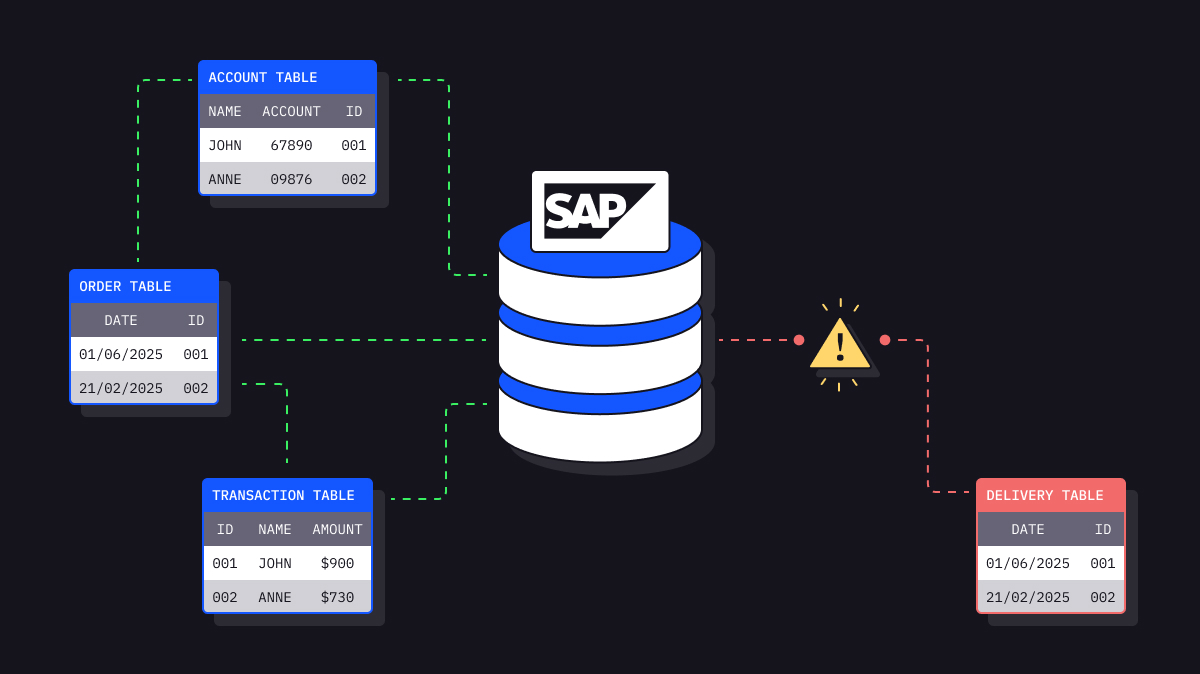
In SAP terms, scrambling operates at the field level. Fields in tables like KNA1 (customer master), LFBK (vendor bank details), or PA0002 (employee personal data) get transformed while everything around them. The document relationships, the posting logic, the referential integrity across modules stays in place.
Scrambling is fast to apply and well understood. It works well for teams that need production-realistic data quickly, where the primary concern is removing identifiable information before it reaches a non-production environment. The limitation is that it can only work with what production contains. It can't create scenarios that don't already exist, and it can't fill coverage gaps for processes that rarely occur in real transactions.
Masking
Masking is often used interchangeably with scrambling, but they're not quite the same thing. Scrambling typically refers to transforming values within a field—shuffling characters or substituting names. Masking is a broader term that encompasses a range of techniques, including substitution, hashing, tokenization, nulling, and others.
In practice, for SAP testing purposes, the distinction matters less than understanding what both approaches share: they both start from production data. Masking protects what's there. It doesn't create what isn't.
The SAP-specific complexity with masking is that not every field can be changed without consequences. Country codes, certain configuration reference values, and system-managed identifiers. Mask those, and the environment breaks. SAP-aware masking determines which fields are off-limits based on the modules in scope. Generic masking tools don't, which is how teams end up with environments that are either over-exposed or non-functional.
Synthetic data generation
Synthetic data takes a different starting point entirely. Rather than transforming production records, it generates new data from scratch, built to match the rules, relationships, and logic of the SAP environment without containing any real production information.
Synthetic data generation looks at the system's configuration and generates new, clean, dependency-correct data that fits the rules of that SAP environment — understanding pricing schemas, tax logic, material valuation, business partner roles, document types, and FI/CO posting logic, then building new customers, materials, documents, or processes from scratch.
This makes synthetic generation particularly useful in a few specific scenarios:
- Production data is prohibited from use in test environments due to regulatory requirements
- There isn't enough data of a particular type for adequate coverage, a rare order type, a specific payment combination, a process variant that almost never occurs in production
- The team needs repeatable, version-controlled test datasets that don't change between runs
- Edge cases and negative scenarios need to be deliberately created rather than hoped for in a production extract
The limitation is that synthetic data requires the generation logic to correctly understand the SAP configuration. Get that wrong, and the data looks valid but fails when it meets real business process logic.
How they compare in practice
Rather than thinking about which method is best, it helps to consider which question each method answers.
Scrambling and masking
How do we use production data safely? They're the right choice when production data provides the best test coverage — realistic transaction volumes, genuine business scenarios, the kind of organic complexity that only comes from real operations — but can't be used directly because of compliance requirements.
Synthetic generation
How do we create data that doesn't exist in production? It's the right choice when the scenario being tested is rare, when production data is unavailable or prohibited, or when the team needs precise, repeatable datasets rather than a copy of whatever production happened to contain.
Masked production data excels at fidelity but still carries compliance overhead and can inherit production flaws. Synthetic data is privacy-safe and flexible but often lacks the subtle variations needed for complex SAP flows involving pricing logic, cross-module dependencies, and historical states.
Neither is universally better. Most mature SAP testing programs use both, with the choice driven by what each test scenario actually needs.
The SAP-specific considerations
Generic guidance on masking versus synthetic doesn't fully account for what makes SAP different from other enterprise systems.
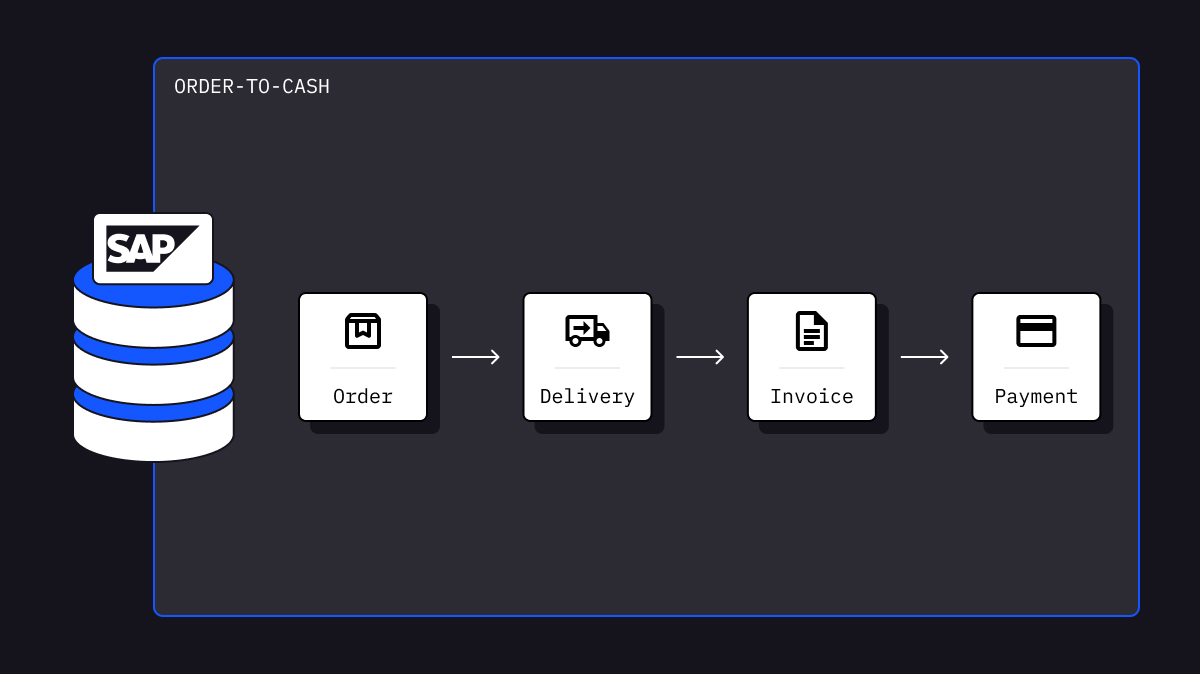
SAP's data model is built around thousands of interconnected tables encoding business rules, organizational hierarchies, and process logic. Scramble or mask a field without understanding those dependencies, and the data stops making sense to SAP. Generate synthetic data without understanding the configuration, and the data looks correct, but fails in testing.
The compliance picture is also more complex than in most systems. Personal data in HR modules and customer data in finance sit alongside corporate compliance-sensitive data, including supplier pricing, internal financial models, and, in some industries, ITAR-controlled information. Each category has different handling requirements, and applying the same approach across all of them creates gaps.
This is why SAP-specific test data management matters. The methods themselves — scrambling, masking, and synthetic, aren't unique to SAP. The intelligence required to apply them correctly in an SAP environment is.
Synthesized's AI-native test data management platform supports all three methods from a single control plane. Module-aware masking that understands which fields can and can't be changed. Synthetic generation that follows SAP business logic and referential integrity. On-demand provisioning that covers every scenario across SAP and non-SAP systems, with storage footprints up to 99% smaller than full-copy approaches.
The question isn't which method to use. It's having a platform that makes all of them available when the scenario calls for them.
Want to see how Synthesized handles scrambling, masking, and synthetic generation for SAP? Book a demo and find out how SAP QA teams get the right data for every test scenario without the manual overhead.