
TL;DR
- Agile and DevOps have fundamentally changed delivery cadences, but test data provisioning has not kept pace
- Manual test data preparation is structurally incompatible with continuous delivery; it creates a bottleneck that slows everything built on top of it
- Shift-left testing only works if compliant, production-realistic data is ready when testing needs to start
- Treating test data as code: versioned, automated, and deployable through the same pipelines, is how leading teams are solving this
- Agentic AI testing pipelines require a data layer that operates continuously, not one running on a weekly refresh cycle
- Synthesized integrates into existing DevOps toolchains via API and data-as-code configuration, with storage footprints up to 99% smaller than full copy approaches
Most engineering teams have spent the last decade getting faster. Agile sprints replaced long waterfall cycles. DevOps brought development and operations together. CI/CD pipelines automated the build, test, and deployment process. By 2026, 70% of organizations are expected to implement a continuous testing model; a significant shift from where the industry was even a few years ago.
And yet for most engineering teams, getting test data ready still means asking someone to do something manually and then waiting to see how long it takes. The pipeline is automated. The data layer is not.
The delivery pipeline is automated. The data layer is not. And that gap is where continuous delivery quietly breaks down.
Why test data became the bottleneck nobody planned for
The shift to agile and DevOps changed how teams work, communicate, and ship. What it didn't change was the infrastructure underneath testing. Test data kept running on the old schedule while everything around it accelerated.
Tricentis research confirms what most engineering teams already know from experience: test data availability is slow, unpredictable, and a consistent reason delivery cycles slip.
The reason is partly historical. Test data processes were designed for a world where releases happened quarterly or annually. A two-week wait for a refreshed test environment was inconvenient but manageable. In a world where code is being merged multiple times a day, and pipelines run on every commit, two weeks is the entire sprint.
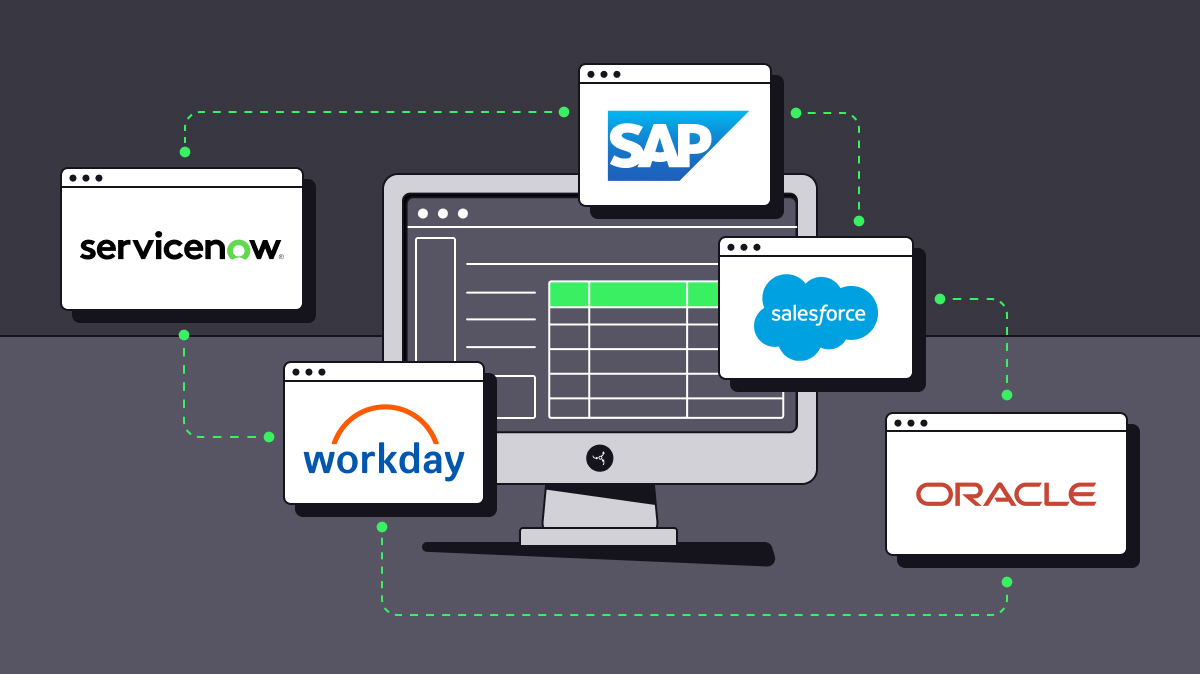
Modern applications don't sit in isolation either. They depend on interconnected microservices, APIs, event streams, SAP systems, and distributed databases, each of which needs consistent, aligned data to test against. In practice, that creates a familiar set of problems:
- Environment refreshes taking days or weeks before testing can begin
- Dependency on a DBA or TDM specialist whose availability determines whether the sprint closes
- Broken referential integrity across microservices producing failures that look like application defects
- Test failures caused by stale or inconsistent data
- Production data copies creating compliance exposure in non-production systems
- Sprint sign-offs and UAT cycles delayed because the data simply wasn't ready
These aren't edge cases. They're the standard experience of teams running continuous delivery on a test data layer that was never designed for it.
What shift-left testing actually requires
Shift-left testing (the practice of moving testing earlier in the development cycle) is one of the most widely adopted principles in modern software delivery by up to 30%.The logic is straightforward: defects found earlier are cheaper and faster to fix than defects found in UAT or production.
But shift-left testing has a dependency that often gets overlooked. For testing to happen earlier, the data that testing runs on needs to be available earlier. A test that cannot start because the environment is still being prepared is not shifting left. It is waiting in the same place it always was, just earlier in the sprint.
Shift-left testing only succeeds when compliant, production-realistic test data is available instantly as part of the development workflow, not as something requested from a central team and delivered days later. That requires on-demand provisioning built directly into the pipeline, not a manual process sitting outside it.
Many teams are addressing this by moving away from production data dependency entirely, adopting synthetic and scenario-driven data generation to improve coverage across edge cases, compliance-sensitive scenarios, and process variants that production data doesn't naturally contain. The result is test data that is ready when the developer writes the test, not when the preparation process finishes.
The compliance dimension
Faster delivery cycles mean more environments, more often, each carrying data that may never have been properly protected. GDPR and CCPA apply in test environments as much as in production. A record deleted from the live system can sit in QA for months. At the pace of continuous delivery, manual compliance processes simply cannot keep up.
This is especially acute in regulated industries. Banking, healthcare, insurance, and enterprise environments running SAP all operate under frameworks — GDPR, HIPAA, PCI-DSS, data residency requirements — that apply regardless of whether the environment is production or a pipeline test run. Masking needs to be applied at the point of data generation, not as a step someone schedules after the copy has already landed.
What data-as-code changes
One of the most significant shifts in how leading engineering teams are approaching test data is treating it the same way they treat application code, versioned, reviewable, and deployable through the same pipelines as everything else.
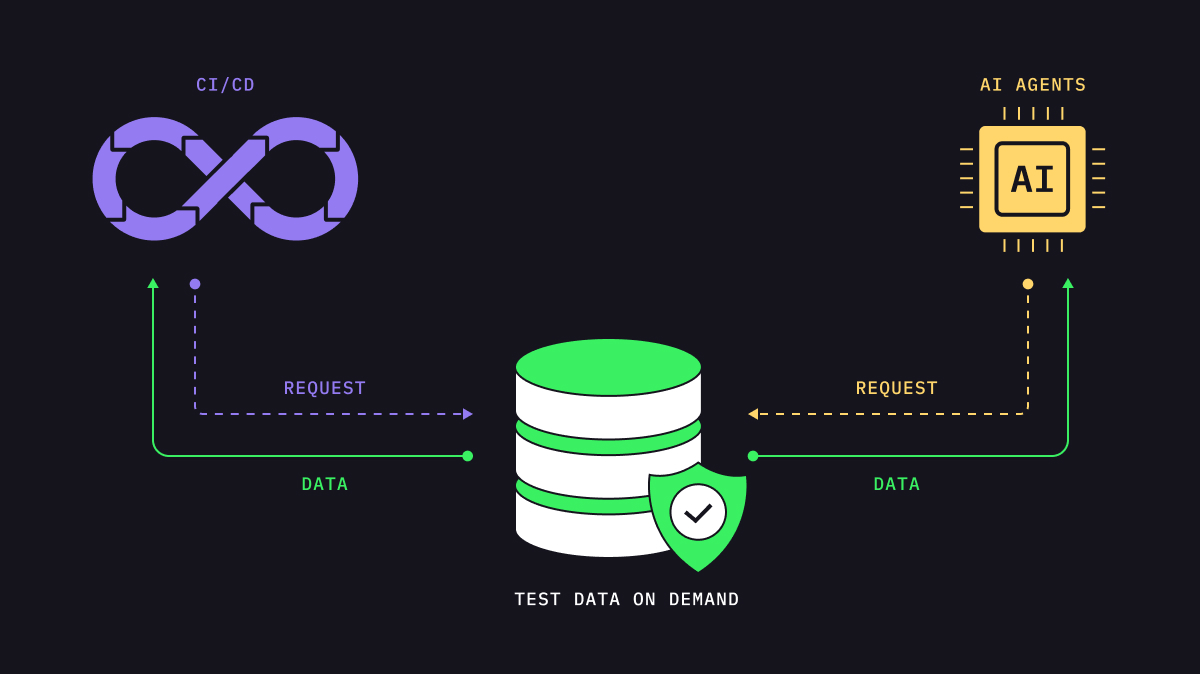
Data-as-code means test data requirements live in version control alongside the application code, defined in configuration files that the pipeline reads and acts on automatically. When a run triggers, it calls an API, gets what it needs, and proceeds. The manual preparation step disappears entirely.
This approach has several advantages beyond speed. Test data definitions become reviewable artifacts. Changes to data requirements go through the same review process as changes to application code. And when something breaks, the data state at the time of the failure is reproducible rather than lost.
What modern test data provisioning looks like in a DevOps pipeline
The teams making the most progress on this problem share a consistent approach. Test data provisioning is treated as a first-class capability in the engineering platform rather than an operational task managed outside the pipeline.
What that looks like in practice varies by team, but the common thread is that data stops being something the pipeline waits for. It arrives on demand, at the right size for what's being tested, with compliance handled automatically rather than as a separate task. The pipeline doesn't slow down for it. This aligns test data provisioning with the same infrastructure-as-code and CI/CD automation principles that DevOps teams already apply to everything else in the stack; version-controlled, automated, and repeatable.
Left to their own devices, teams provision data the way they always have: copying what they need, applying whatever masking they can, storing it wherever makes sense at the time. It works until it doesn't. A centralized test data platform with API-first access provides every pipeline with a single, governed source and removes the compliance exposure that comes from teams managing data independently.
Where agentic AI fits in
Gartner's projection that 80% of enterprises will use AI-augmented testing tools by 2027 — up from 15% just four years earlier — reflects something already visible in leading engineering organizations. Agentic testing tools that dynamically generate cases and continuously execute regression suites are moving from pilot to standard practice faster than most people expected.
These pipelines require continuously available, dynamically generated, and scenario-rich datasets that can scale alongside autonomous testing agents. An AI agent running continuously cannot wait for a weekly data refresh. It needs a data layer running at the same cadence — consistently compliant, and rich enough in scenario coverage to support dynamic test generation rather than a fixed set of pre-defined cases.
The shift toward AI-assisted software delivery is making automated test data provisioning a foundational engineering capability rather than a supporting process. The teams building toward agentic testing today are the ones investing in their test data infrastructure now.
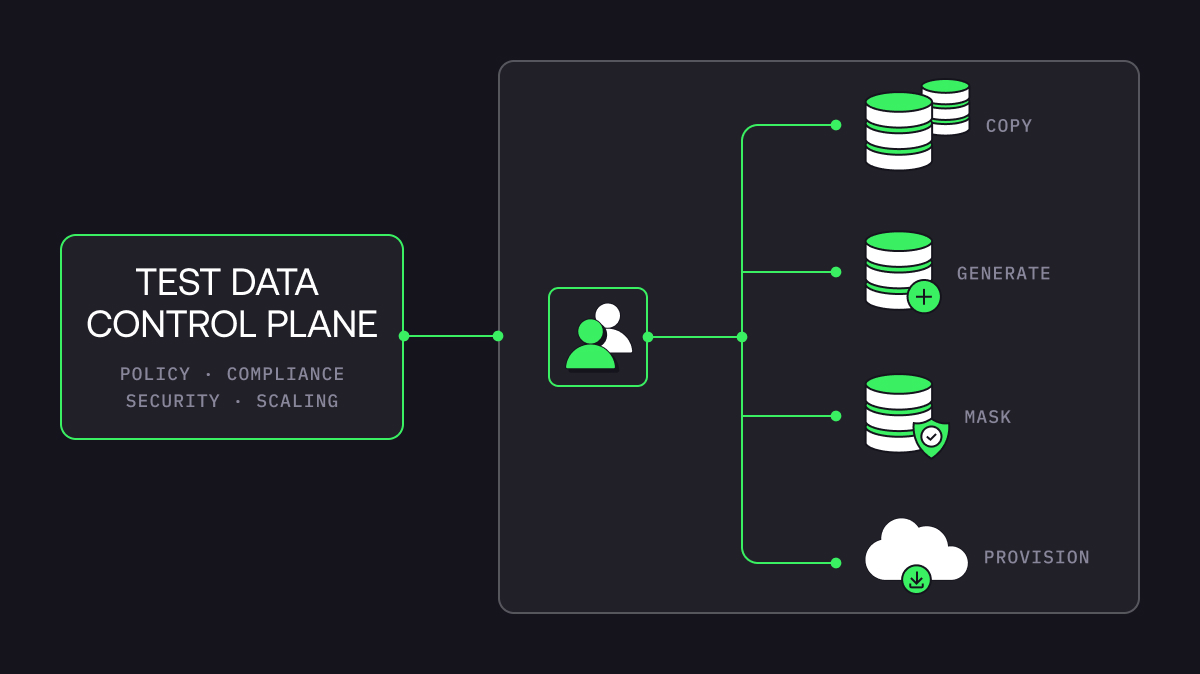
Synthesized combines masking, subsetting, synthetic data generation, and API-driven provisioning within a single AI-native platform designed for modern engineering teams. Production-realistic synthetic data, scenario-driven generation, and privacy-safe datasets for AI testing, all available on demand, defined as code, and compliant by default. It drops into existing pipelines and toolchains without disruption, with no parallel processes or manual handover. Organizations using Synthesized report storage achieve footprints up to 99% smaller than full-copy approaches and delivery cycles up to 70% faster.
Agentic AI pipelines continuously generate and execute tests, which means the underlying data layer must also operate continuously, dynamically provisioning compliant, scenario-rich datasets in real time. Continuous delivery only works when test data provisioning keeps pace with automated engineering pipelines. The data layer is the one most teams haven't fixed yet.
Want to see what on-demand test data provisioning looks like in a DevOps pipeline? Book a demo and find out how Synthesized helps engineering teams remove the test data bottleneck from their continuous delivery process.