TL;DR
- Agentic AI testing is moving from experimental to operational in leading engineering organizations
- Traditional test data approaches were built for human-driven testing and don't meet what autonomous agents require
- Agentic testing needs data that is continuously available, dynamically generated, scenario-rich, and privacy-safe by design
- The shift demands a move from test data management to test data orchestration across systems and agent workflows
- In regulated industries, the real challenge is business-context-aware data that reflects genuine process logic, not just statistical realism
- Synthesized is built for exactly this model
By 2026, Gartner forecasts that AI agents will independently handle up to 40% of QA workloads. Over 72% of QA teams are already exploring or planning to adopt AI-driven testing workflows. In leading engineering organizations, agentic testing is no longer a roadmap item. It is already operational.
The conversation in most of those organizations has focused on the agents themselves. Which tools? Which frameworks? How to build self-healing scripts. How to integrate risk-based test selection. How to get autonomous regression running without someone maintaining it by hand.
What hasn't received the same attention is the layer those agents depend on. Test data. And the gap between what agentic testing requires from a data layer and what most test data processes were built to provide is significant.
What agentic testing actually does differently
Traditional automated testing runs on a schedule. Someone triggers a pipeline, or a commit kicks one off, and the tests run against whatever environment and data happen to be available. If the data is stale, the tests may still pass — and the stale data is the problem, not the application. If the environment hasn't been refreshed in three weeks, that's three weeks of configuration drift that the tests aren't catching.
Human testers work around these limitations. They know when the data is old. They know which test failures are data issues and which are real defects. They exercise judgment that compensates for a lot of what the data layer doesn't provide.
Agentic AI doesn't compensate. It acts on what it's given.
An agent running continuously generates test cases dynamically, executes them, learns from the results, and adapts its approach based on what it finds. It doesn't wait for a scheduled window. It doesn't know the data was refreshed three weeks ago. It doesn't distinguish between a failure caused by a genuine defect and a failure caused by data that no longer reflects how the system actually works. It just executes, at the pace it was built to run at, against whatever the data layer provides.
This changes what the data layer needs to be, not incrementally, but fundamentally.
What agentic AI requires from test data
The requirements shift in four specific ways:
Continuous availability
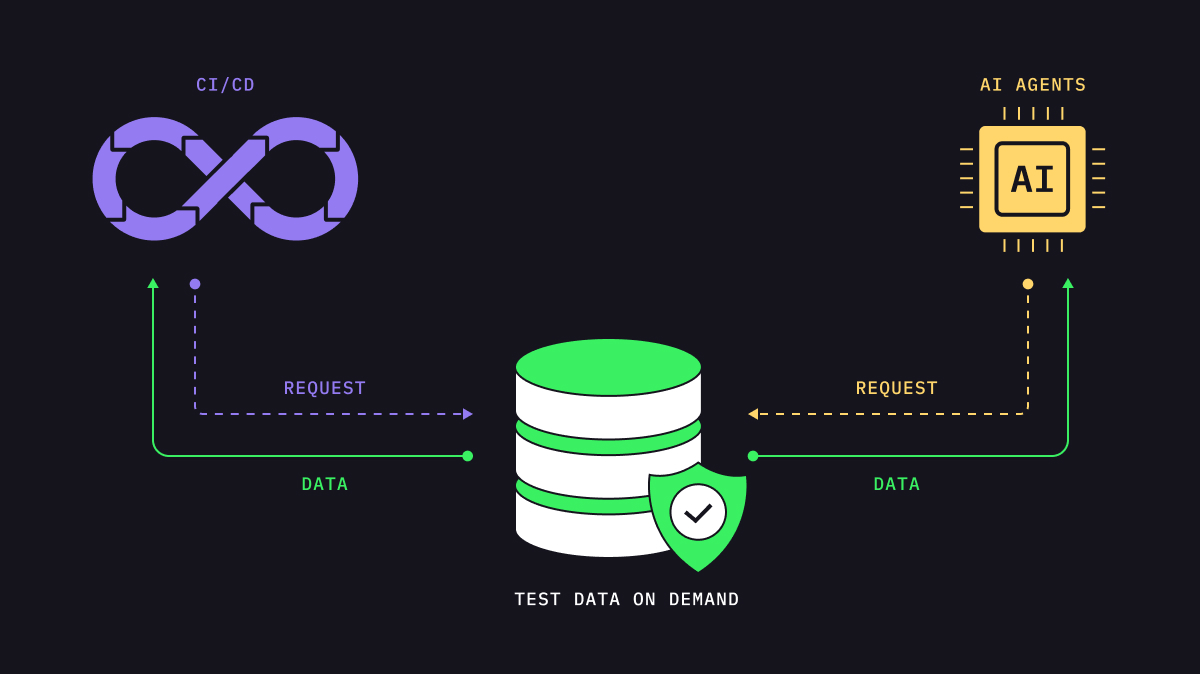
A human testing team can work around a two-day environment refresh. An agent running on every commit cannot. The data layer needs to be available on demand, at any point in the pipeline, without a preparation step that sits outside the automation.
Dynamic generation
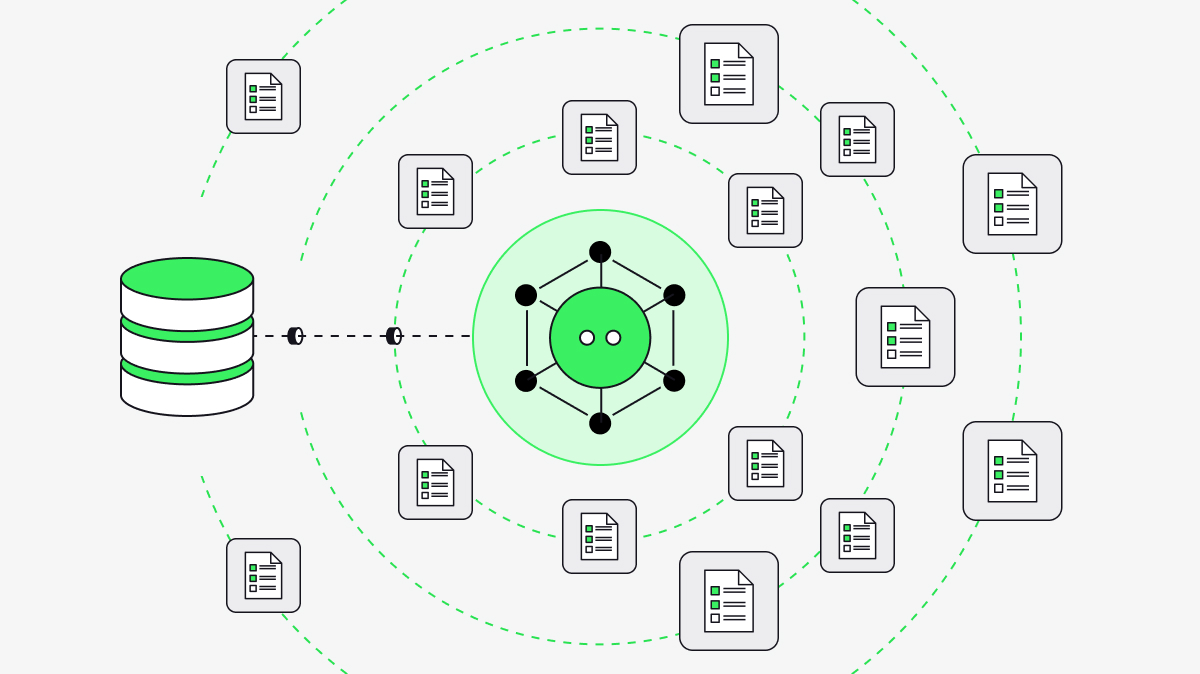
Static datasets (production copies refreshed periodically) reflect what has happened. Agentic systems need to explore what could happen. They need data that covers edge cases, process variants, and scenario combinations that production data doesn't naturally contain. Agents that are only ever tested against common-path data will eventually encounter the uncommon paths in production.
Scenario richness
An agent learns from the data it tests against. If the dataset is thin, the agent's understanding of system behavior is thin. If it covers only a narrow range of process variants, the agent builds a narrow model of the system's behavior. Scenario-rich data, built deliberately for coverage rather than extracted from whatever production happened to contain, is what allows agents to develop accurate behavioral models before they're trusted to act.
Privacy safety by design
Human testers working with unmasked production data are a known, manageable risk. Someone is accountable. Access is visible. Agentic systems change that equation. An agent running continuously, without human oversight, against data it shouldn't have access to, doesn't create a compliance incident in a single session. It creates one on every run, before anyone notices. The only answer is data that arrives already clean.
Why the current approach doesn't hold up
Most test data processes were built around a periodic refresh model. Someone schedules a copy, runs a masking job, validates the environment, and hands it over to the testing team. It works for testing cycles that run on a human schedule. It doesn't work when the testing cycle never stops.
Most test data processes depend on specific people knowing specific things: the basis engineer who runs the refresh, and the DBA who maintains the masking rules
That knowledge rarely lives anywhere else. When those people are out, testing slips. For human teams, that's an inconvenience. For a continuously running agent, it's a blocker that the agent can't work around.
Coverage is where the production copy model falls shortest. A dataset extracted from production reflects the transactions that occurred during that period. It says nothing about the process variants, configuration states, and edge cases that occur infrequently but are no less real. Agentic systems eventually encounter the full range of conditions. Testing them only against what production happened to contain at the last refresh is testing against a fraction of what they'll face.
What the data layer needs to look like
The teams making the most progress in agentic testing have stopped treating test data as something prepared before testing starts. It's infrastructure. It runs alongside everything else, governed the same way, available the same way, updated the same way.
- Data provisioned via API on demand
- Requirements defined as code and version-controlled alongside everything else
- Compliance applied at the point of generation rather than as a separate masking step
- Scenario coverage built deliberately for the processes being tested, rather than extracted from whatever production happened to contain at the last refresh
All of it available at the cadence the agents run at, without a human in the critical path.
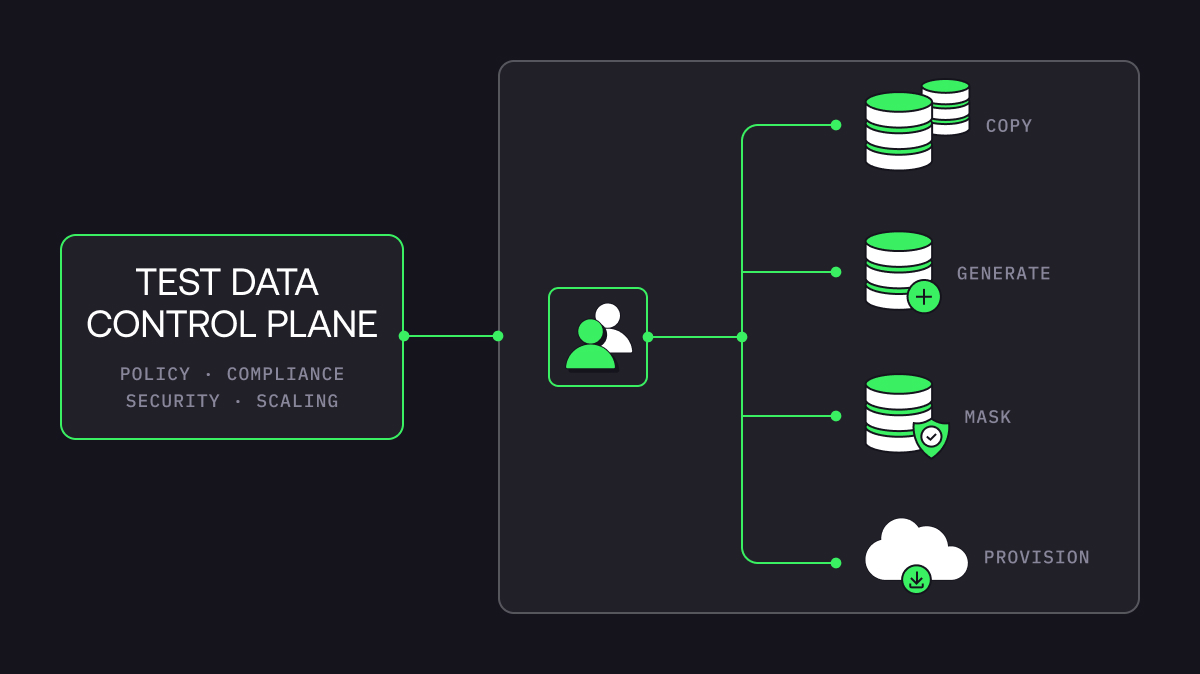
This is a different standard from what most test data processes were designed to meet. It requires a platform built for this model, one that understands both the technical requirements of agentic systems and the business process logic that the data needs to reflect.
This shift is sometimes described as moving from test data management to test data orchestration, from periodic, governed provisioning to a continuously operating capability that coordinates data across systems, environments, and agent workflows in real time.
What engineering leaders should do next
For engineering leaders beginning to think seriously about agentic testing, the starting point is an honest assessment of the current data layer.
- Can it provision on demand without manual intervention?
- Does it cover the edge cases and process variants agents will encounter?
- Is compliance built in or applied after the fact?
Those three questions tend to reveal quickly whether the current approach is built for what's coming. But there is a fourth consideration that matters particularly in regulated industries and complex enterprise environments: whether the data reflects genuine business context, not just statistical realism.
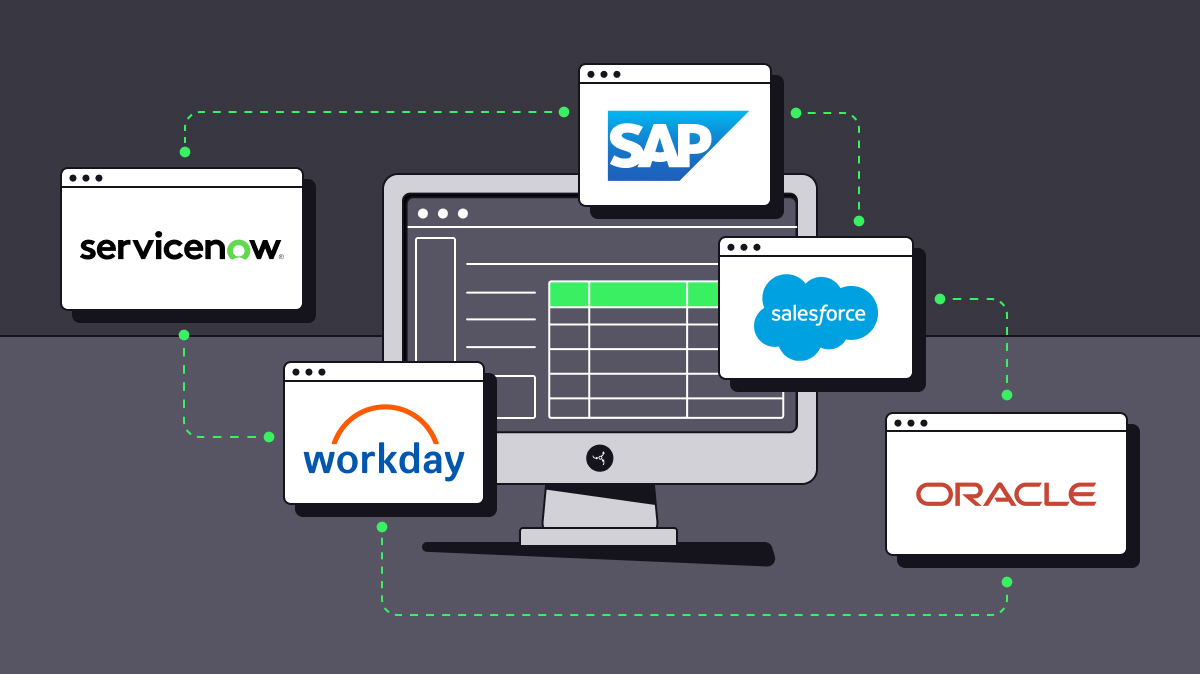
An agent testing a loan application, insurance claim, SAP Order-to-Cash process, or payment workflow needs data that understands relationships, business rules, and end-to-end transactions across systems. Volume and realism aren't enough if the data doesn't reflect how real business processes actually work. For banking, insurance, healthcare, and SAP customers, this is where the real challenge sits, not generating enough data, but generating data that reflects the complexity of real enterprise operations. That requires integrated synthetic data and cross-system orchestration, not point solutions managing data one system at a time.
Synthesized combines masking, subsetting, synthetic data generation, and API-driven provisioning within a single AI-native platform. Production-realistic data, scenario-driven generation, and privacy-safe datasets for AI testing, all available on demand, defined as code, and compliant by default. Organizations using Synthesized report storage footprints up to 99% smaller than full-copy approaches and delivery cycles up to 70% faster.
Agentic AI changes what testing can do. The data layer determines whether it works.
Want to see what a test data layer built for agentic AI looks like? Book a demo and find out how Synthesized gives engineering teams the data foundation their agentic workflows need.