TL;DR
- Most TDM platform evaluations are triggered by a specific failure — a release slip, a compliance gap, manual processes that have stopped scaling
- The TDM market contains a wide range of approaches, from point solutions to unified platforms, and the differences matter
- The right evaluation criteria depend on what your organization actually needs, not a generic checklist
- Key dimensions: generation method coverage, SAP and non-SAP system support, compliance approach, pipeline integration, and agentic AI readiness
- The platforms worth serious consideration make all generation methods available from a single control plane, with compliance built in rather than bolted on
Most TDM platform evaluations start with a specific trigger. A migration dry run that took three weeks to prepare and still wasn't right when it landed. A compliance review found sensitive data sitting in a test environment that had no business being there. A release cycle that slipped because the team was still waiting on an environment refresh. Manual processes that had been just about viable for years suddenly weren't.
By the time an organization is actively evaluating platforms, the cost of the current approach is already clear. The harder question is knowing what to look for in something better.
Start with what you actually need
The instinct in most platform evaluations is to build a long list of features and score vendors against it. The problem with that approach in TDM is that the market contains a very wide range of products — from single-purpose masking tools to full test data platforms — and a feature comparison doesn't always reveal the structural differences between them.
A more useful starting point is understanding what your current approach is failing to do, and what that failure is actually costing. The answer to that question shapes which capabilities matter most in an evaluation.
A team running SAP migrations needs something different from a team running microservices on a quarterly release cadence. A financial services organization with strict data residency requirements has different priorities from a software company whose primary concern is coverage and speed. Getting clear on what you actually need before starting an evaluation is what prevents you from buying a platform that solves the problem you had last year rather than the one you have now.
The dimensions that matter
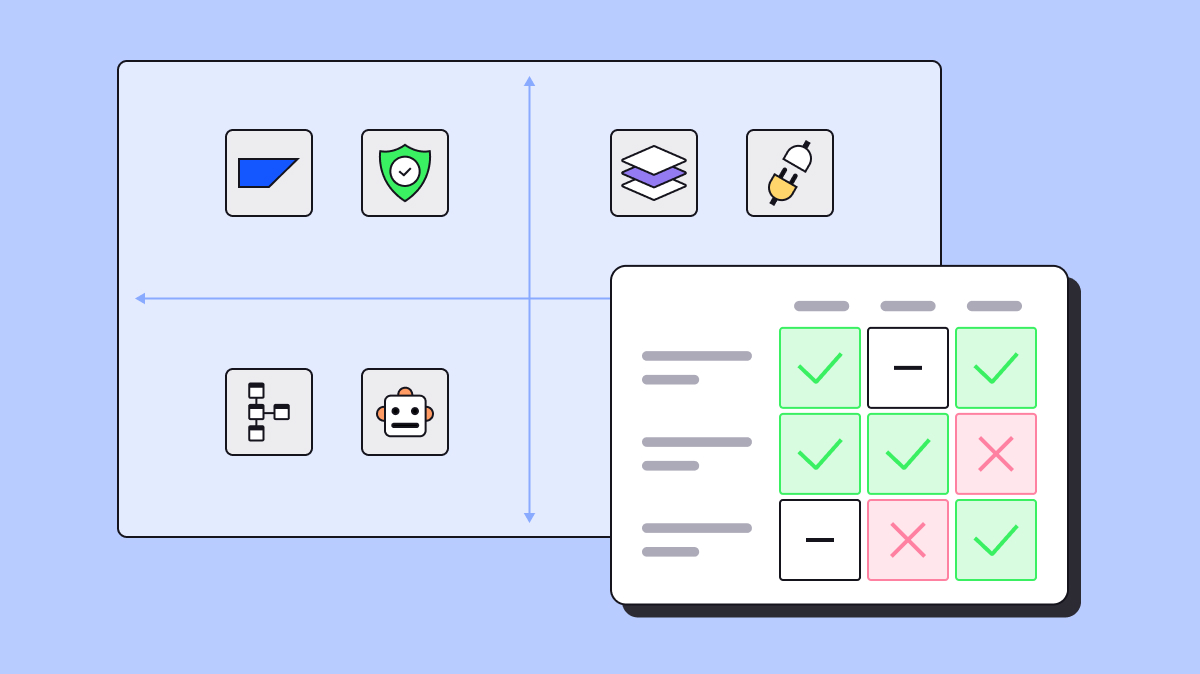
Once you're clear on what you need, there are five dimensions worth evaluating seriously.
Generation method coverage
Test data management is not one thing. Copy and refresh, masking and scrambling, subsetting and time slicing, synthetic data generation. These are distinct approaches that suit different scenarios. A platform that only does one or two of them will require you to build workarounds for the others, which is how point solution sprawl starts.
The question to ask is not which methods the platform supports in theory. The methods are available on demand, automated, and governed from a single control plane. Platforms that require manual steps or separate tools for different methods don't solve the fragmentation problem. They just move it.
System coverage
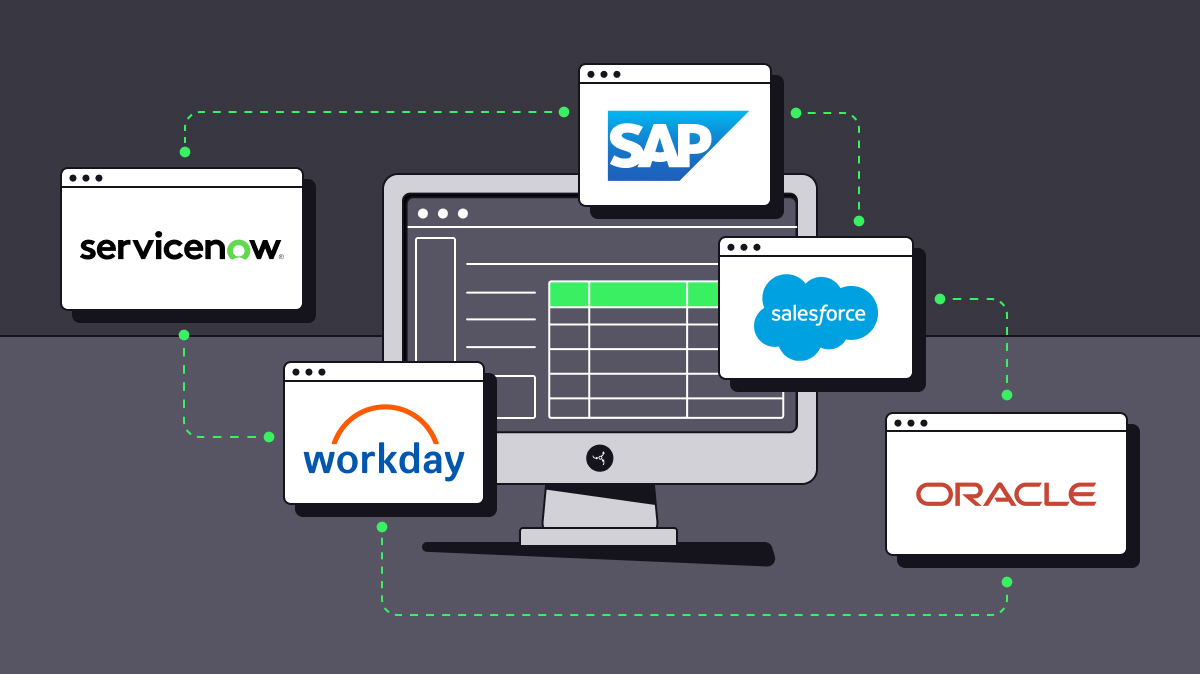
Modern enterprise testing doesn't happen in a single system. Business processes run across SAP and non-SAP systems simultaneously. An Order-to-Cash test needs consistent, aligned data across Salesforce, SAP, Ariba, and any downstream logistics platform. A platform that handles only one system leaves the cross-system alignment problem entirely unsolved.
For SAP environments specifically, this dimension deserves extra scrutiny. SAP's data model is genuinely different from standard relational databases. A platform that claims SAP support but doesn't understand which fields drive SAP business logic (and which can't be changed without breaking process integrity) will produce environments that are either over-exposed or non-functional. Ask specifically how the platform handles SAP-aware masking, time slicing that follows business process boundaries rather than calendar dates, and Z-tables and custom extensions.
Compliance approach
There are two fundamentally different ways to approach compliance in TDM. The first is to apply masking as a step after data has been copied, a masking job runs, sensitive fields get transformed, and the result lands in the test environment. The second is to build compliance into the provisioning process itself, so data arrives already protected rather than being protected after the fact.
The first approach creates a window of exposure between copy and masking that shows up in audit logs. It also depends on masking rules being maintained by hand as schemas evolve, which they rarely are consistently. The second approach closes that gap. When evaluating platforms, ask specifically when and how masking is applied, how classification rules are maintained as the schema changes, and what the audit trail looks like.
Pipeline integration
A TDM platform outside the development pipeline requires manual management. That dependency is the source of most of the bottlenecks that drive organizations to evaluate new platforms in the first place.
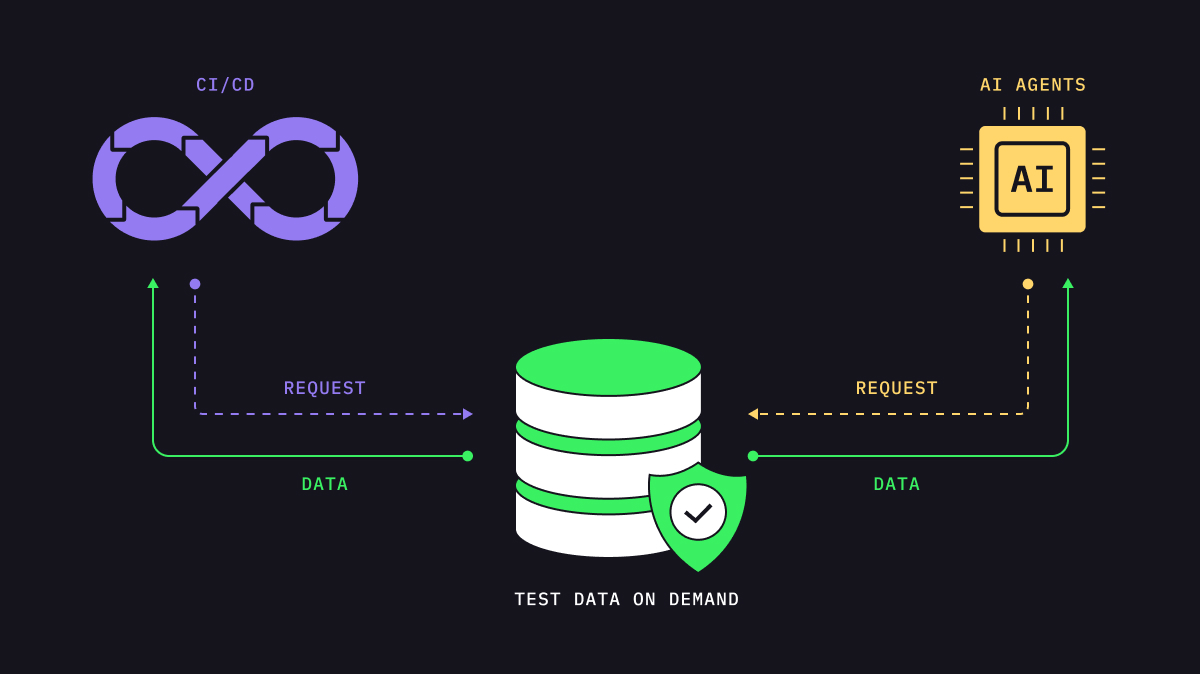
The platforms worth serious consideration offer API-first provisioning that can be embedded directly into existing pipelines and testing toolchains. Data requirements are defined as code, version-controlled alongside application code, deployable through the same processes. Ask whether the platform integrates with your specific testing toolchain, whether that's Tricentis Tosca, UiPath, SAP Solution Manager, or a custom ABAP-based framework, and what that integration actually looks like in practice rather than in a sales deck.
Agentic AI readiness
This dimension matters more than most evaluations currently account for. As outlined in our recent blog on agentic AI and test data (INSERT LINK ONCE PUBLISHED), the requirements for agentic testing are meaningfully different from those for human-driven testing. Data needs to be continuously available, dynamically generated, scenario-rich, and privacy-safe by design. A platform that can't meet those requirements today will require replacement when agentic testing becomes operational, which, for many organizations, is already happening.
Ask whether the platform supports continuous data streams, API-based provisioning without manual steps, and synthetic generation rich enough to cover the edge cases agents will encounter. Ask whether it has been designed with agentic workflows in mind or whether it's a human-scale platform that claims compatibility.
The questions worth asking in a vendor conversation
Beyond the five dimensions above, a few specific questions tend to reveal more than a standard demo:
What does the platform do when a field can't be masked without breaking process logic? How does it handle custom tables and extensions that aren't part of the standard schema? What happens to masking rules when the schema changes? Is that a manual update or an automated one? Can you show me what a pipeline integration actually looks like, end to end, rather than describing it?
The answers to those questions separate platforms with genuine depth from those with surface coverage.
What to watch out for
Point solutions tend to perform well in demos because they do one thing well. The problem surfaces when the organization needs more than that one thing, which is usually sooner than expected. A masking tool that doesn't support synthetic generation forces the team to use a second platform. A subsetting tool that doesn't understand SAP business process boundaries produces broken environments. A platform that handles SAP but nothing else leaves cross-system testing unaddressed.
The other thing to watch for is compliance that depends on manual maintenance. Classification rules are written once and never updated. Masking configurations that don't account for new modules or integrations added since the last review. These gaps are invisible until a compliance review finds them, and by that point, they've been accumulating for months.
Synthesized covers all five evaluation dimensions from a single platform. AI-powered sensitive data discovery across complex schemas. Module-aware masking that understands SAP business logic. Every generation method is available on demand. API-first provisioning that integrates directly into existing pipelines and testing toolchains. And a data layer built for agentic workflows and human-driven testing. Storage footprints up to 99% smaller than full copy approaches and delivery cycles up to 70% faster.
The platform evaluation is worth doing carefully. The cost of getting it wrong tends to compound.
Want to see how Synthesized performs against these criteria? Book a demo to see what a modern TDM platform looks like in practice.