TL;DR
- Generic TDM platforms claim to support SAP, but are ineffective because they fail to support its complex business data context
- Master data and transactional data behave differently in SAP and need to be handled differently in testing
- Without this, tests fail for data reasons that look like application defects, and take days to diagnose
- SAP-native test data automation means the platform understands SAP's schemas, business logic, and module dependencies, not just its data formats
- The right platform integrates into CI/CD pipelines and keeps pace with modern SAP delivery cadences
If you've spent time as a QA lead in an SAP environment, you'll know the feeling. A test fails. The error doesn't point clearly to anything. Two days later, after working through the stack, someone finds a data issue: a master record that doesn't exist in one environment, a configuration that was refreshed in one system but not another, a relationship that broke somewhere in the subsetting process.
Nothing wrong with the application. The data was never right to begin with.
This is the problem that SAP-native test data automation is designed to solve. But the term gets used loosely, so it's worth being precise about what it actually means in practice.
What generic TDM gets wrong about SAP
Most test data management platforms were built for standard relational databases with predictable schemas. They do a reasonable job of extracting data, masking sensitive fields, and loading it into test environments.
SAP is not a standard relational database. It is a system of record for business processes (finance, procurement, logistics, HR, and more), built on thousands of interconnected tables that encode business rules, organizational hierarchies, and configuration logic specific to your implementation. The complexity goes well beyond what most generic TDM platforms were designed to handle, and the gaps show up quickly in testing.
Generic subsetting tools extract data without understanding the relationships between SAP tables. The result is datasets that look complete but fail when a business process tries to run against them. Generic masking tools anonymize fields without understanding which fields SAP relies on for process logic, scrambling values that should never change, leaving relationships broken, or missing fields that carry sensitive data because they weren't on the original mapping list.
For a QA lead, this translates into test environments that require significant manual repair before they're usable, test failures that look like application defects until someone traces them back to data, and coverage gaps that only surface in production.
What SAP-native actually means
SAP-native test data automation means the platform understands how SAP works, not just what its data looks like.
In practical terms, that covers several things.
- Schema intelligence at the SAP level. The platform understands the table structures, functional dependencies, and relationship hierarchies that define SAP's data model. It knows that a change to a material record has downstream implications across multiple dependent tables, and handles those relationships automatically rather than leaving them to be fixed manually.
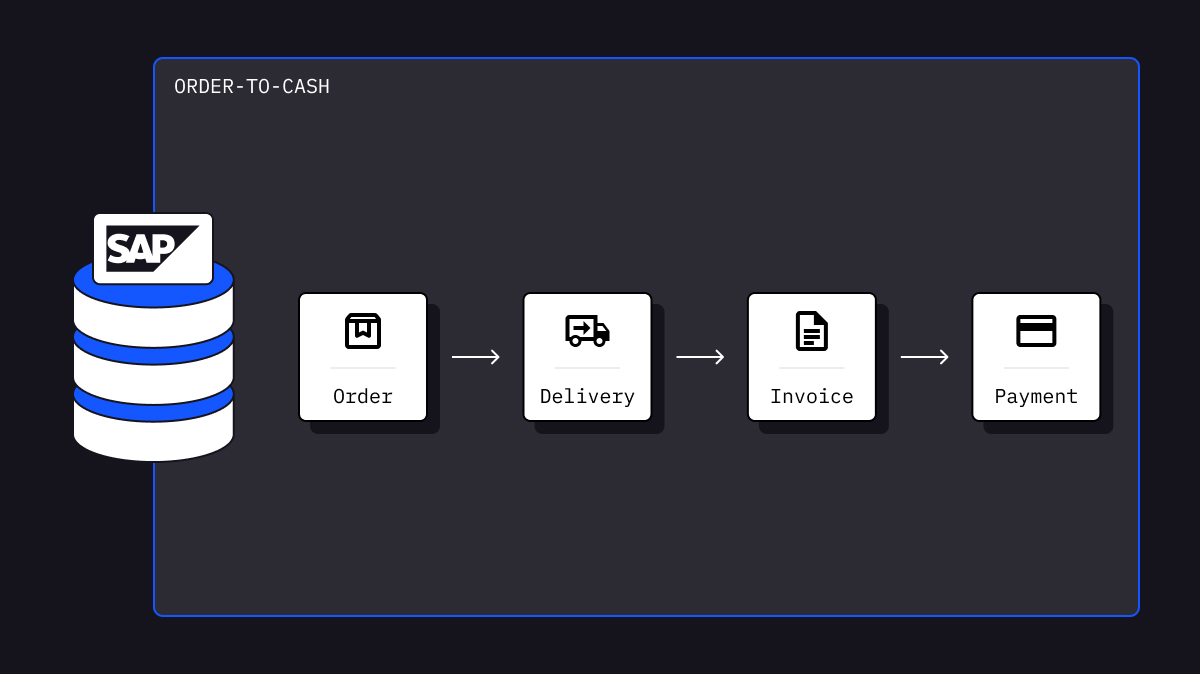
- Appropriate handling of master and transactional data. These behave differently in SAP and have different testing requirements. Master data (customers, vendors, materials, organizational structures) tends to be stable and shared across processes. Transactional data, orders, deliveries, invoices, and postings are time-dependent and process-specific. An SAP-native platform treats them differently because they are different, applying the right logic to each rather than a one-size approach.
- Business process awareness in time slicing. When subsetting data to a date range, a generic platform cuts at the boundary and moves on. An SAP-native platform understands that business processes don't respect calendar windows: a purchase order raised in one period connects to a goods receipt in another, which connects to an invoice that might fall entirely outside the slice. It looks outside the specified period, where needed, to ensure no process breaks when the data is used.
- Masking that understands the SAP context. Certain fields in SAP cannot be changed without breaking process logic: country codes, certain configuration values, and system-controlled reference data. A SAP-native masking approach knows which fields those are, based on the modules in scope, and leaves them intact while protecting everything that carries genuine PII risk.
Why it matters for CI/CD and continuous testing
SAP testing has traditionally operated on slow cycles; quarterly refreshes, manual environment preparation, and weeks of data wrangling before a test cycle can begin. That cadence doesn't fit modern delivery. S/4HANA implementations are running more frequent releases. Change management is accelerating. Teams building automation frameworks need test data that keeps pace, not data that arrives late and requires repair.
SAP-native test data automation integrates directly into CI/CD pipelines. Environments are provisioned on demand rather than on a schedule. Data is generated or refreshed at the point it's needed, compliant and ready to use, without a manual process standing between the request and the result.
For a QA lead, that means regression suites that can run reliably after every significant change. Integration tests that don't spend half their time diagnosing data misalignment. And confidence in test results that comes from knowing the data underneath them was built for the process being tested, not assembled from whatever production happened to contain last month.
What to look for when evaluating options
Not every platform that claims SAP support delivers SAP-native capability. A few practical questions worth asking:
- Does the platform understand your SAP modules and apply different logic accordingly, or does it treat all SAP data the same way?
- Does time slicing follow business process boundaries or just calendar dates?
- Does masking know which fields cannot be changed without breaking SAP logic?
- Does it integrate into your CI/CD pipeline, or does it still require a manual provisioning step?
These aren't edge cases. They're the difference between a test data platform that works in SAP environments and one that was retrofitted to claim it does.
Synthesized's AI-native test data management platform was built with SAP's complexity in mind. From intelligent schema discovery to module-aware masking and business process-driven time slicing, it gives SAP QA teams production-realistic, compliant test data on demand, without the manual overhead that has historically made SAP testing so slow to scale.
Want to see what SAP-native test data automation looks like in practice? Book a demo and find out how Synthesized helps SAP QA teams test faster, catch more defects earlier, and stop waiting for environments to catch up.