
Ask any program lead who has been through a difficult S/4HANA go-live what went wrong, and you'll get a list. Cutover complexity. Integration failures. Finance processes that behaved differently than expected in production.
What you hear less often is the real answer. Most of those failures were visible weeks earlier, in testing, and the root cause wasn't the technology. It was the data the testing ran on. If that sounds familiar, you're not alone.
A 2025 Horváth study of 200 SAP user companies found that more than 60% experienced deviations in budget, schedule, and quality of results during their S/4HANA migration, with projects running an average of 30% longer than planned. Only 8% finished on schedule. That's not a technology problem. It's a testing problem. And testing problems are almost always data problems in disguise.
Migration focus lands in the wrong place
S/4HANA programs invest significant effort in data migration, cleaning up legacy records, mapping fields to the new data model, and ensuring the right data arrives in the right place. That work matters. But it's answering a different question from the test data.
Data migration is the process of accurately moving your organization's records from ECC to S/4HANA. Test data management is about having the right data, in the right shape, to prove that your business processes actually work in the new environment. Related problems. Not the same problem. Treating good data migration as a substitute for good test data is one of the more expensive assumptions a program team can make.
A survey of senior decision-makers at SAP user organizations found that nearly four-fifths reported data management presented a significant challenge when moving from ECC 6.0 to S/4HANA. Most of that challenge doesn't show up in the migration itself. It shows up in testing, usually at the worst possible moment.
Where migrations actually succeed or fail
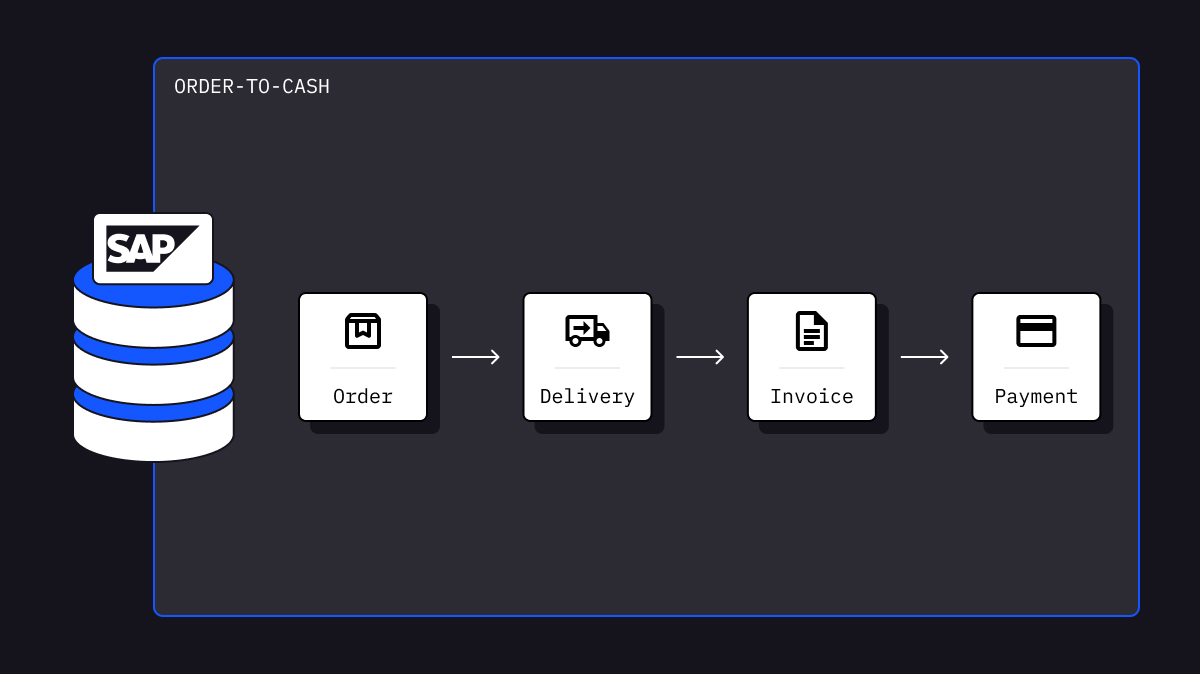
S/4HANA isn't a lift-and-shift. The data model changes significantly in finance, where the Universal Journal replaces multiple legacy tables, which means business processes behave differently. Order-to-Cash, Procure-to-Pay, and Record-to-Report each need to be validated end-to-end in the new environment, not just spot-checked at the unit level.
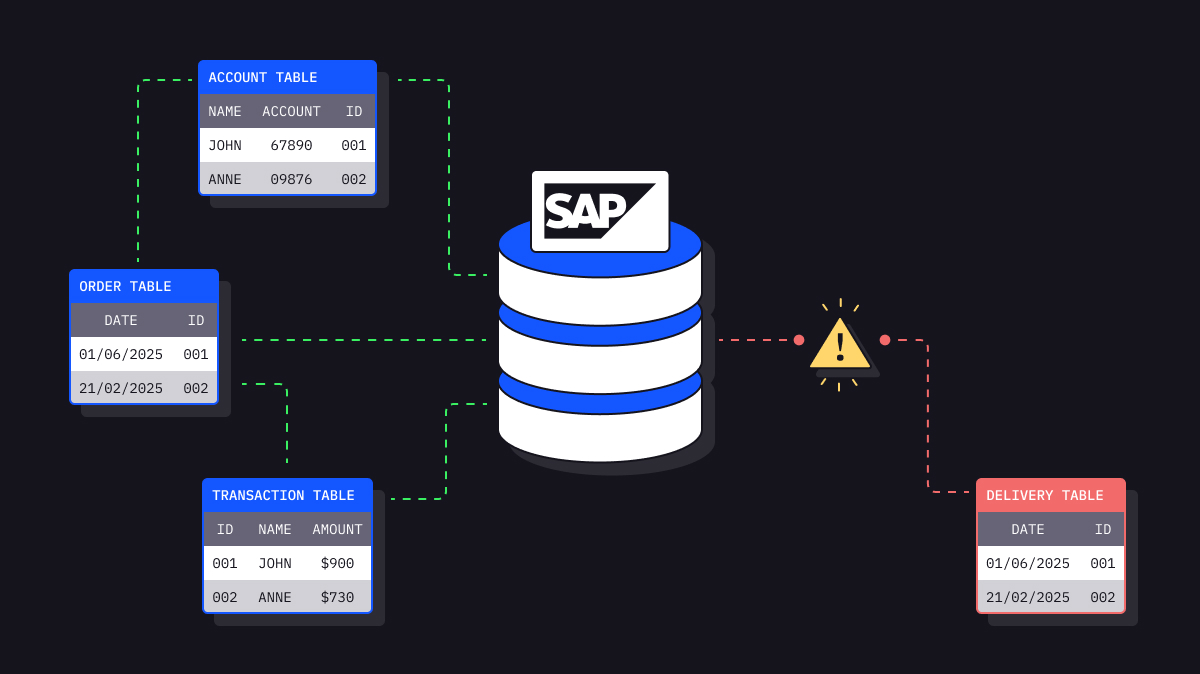
That validation requires data that reflects real business scenarios. Not a subset of ECC records that no longer maps cleanly to the S/4HANA data model. Not a manually assembled collection of test cases that covers the main flows and quietly skips the edge cases that only appear at production volume.
When process testing runs on data that isn't truly representative, defects get missed. They surface in UAT. Or in production, in the days after go-live, when the business is running live transactions, and there's no good time to fix anything. Industry guidance consistently suggests that at least 25-30% of total migration effort should go to data preparation and validation, treating it as an afterthought nearly always produces rework and cutover delays.
Problems that compound
Inadequate test data in a migration program doesn't just cause individual test failures. The damage accumulates.
Regression cycles get shortened because refreshing the test environment takes longer than anyone budgeted for. Teams discover mid-program that the data they've been testing against doesn't reflect a configuration change from three weeks ago. Integration testing between SAP and adjacent systems, Ariba, Salesforce, and third-party logistics platforms, falls apart because nobody aligned the test data across those systems before the tests started. Each problem costs time. In a program running against a hard deadline, that's the one thing nobody has.
Compliance adds another layer. Migration programs replicate large volumes of sensitive data across multiple environments, employee records, financial transactions, and customer and vendor data. Manual masking across SAP's many modules is inconsistent. The gaps aren't always obvious to the teams doing the work. They are obvious to auditors.
What good migration testing actually needs
Sound familiar? The teams that avoid the worst of these problems aren't necessarily better-resourced or better-staffed. They've just stopped treating test data as something that will sort itself out and started treating it as a program deliverable from day one.
That means production-realistic data available from the earliest program phases, not just for UAT but for dry runs, sandbox testing, and integration cycles that happen months beforehand. Data that preserves SAP's business logic and referential integrity, so process tests in the new environment behave the way real transactions do. Compliant data, with PII masked by design rather than after the fact, so teams can work across development, QA, and performance environments without creating exposure. And data that refreshes quickly as configuration changes, without requiring days of manual preparation to get the environment back to a usable state.
Synthesized's AI-native test data management platform is built around exactly this model. By automatically generating production-realistic, compliant datasets aligned to SAP schemas and provisioning them on demand across SAP and non-SAP systems, Synthesized removes the test data bottleneck that causes most migration programs to slip. Teams can provision coherent, scenario-rich data for dry runs, integration testing, and regression cycles in minutes, keeping pace with the program timeline rather than holding it back. Organizations using Synthesized report delivery cycles running up to 70% faster and up to 99% storage savings compared to traditional copy-based approaches.
The 2027 SAP maintenance deadline is real and getting closer. If test data is still an open question in your program, it's worth asking how much that's already costing you, and what it will cost if it stays that way.
Ready to de-risk your S/4HANA migration? Book a demo and find out how Synthesized helps migration teams test faster, validate more thoroughly, and go live with confidence.