
SAP landscapes are not like other enterprise systems. They are vast, deeply interconnected, and governed by decades of accumulated business logic that your organization has built, customized, and depends on entirely. So when it comes to testing within SAP, whether that's an S/4HANA migration or continuous regression testing, the data you use to test matters just as much as the tests themselves.
This is where the term "SAP-native" becomes important. But what does it actually mean, and why should engineering and SAP transformation leaders care?
SAP systems are fundamentally different
To understand why SAP-native test data management matters, you first need to understand why SAP systems are so structurally distinct from other enterprise software.
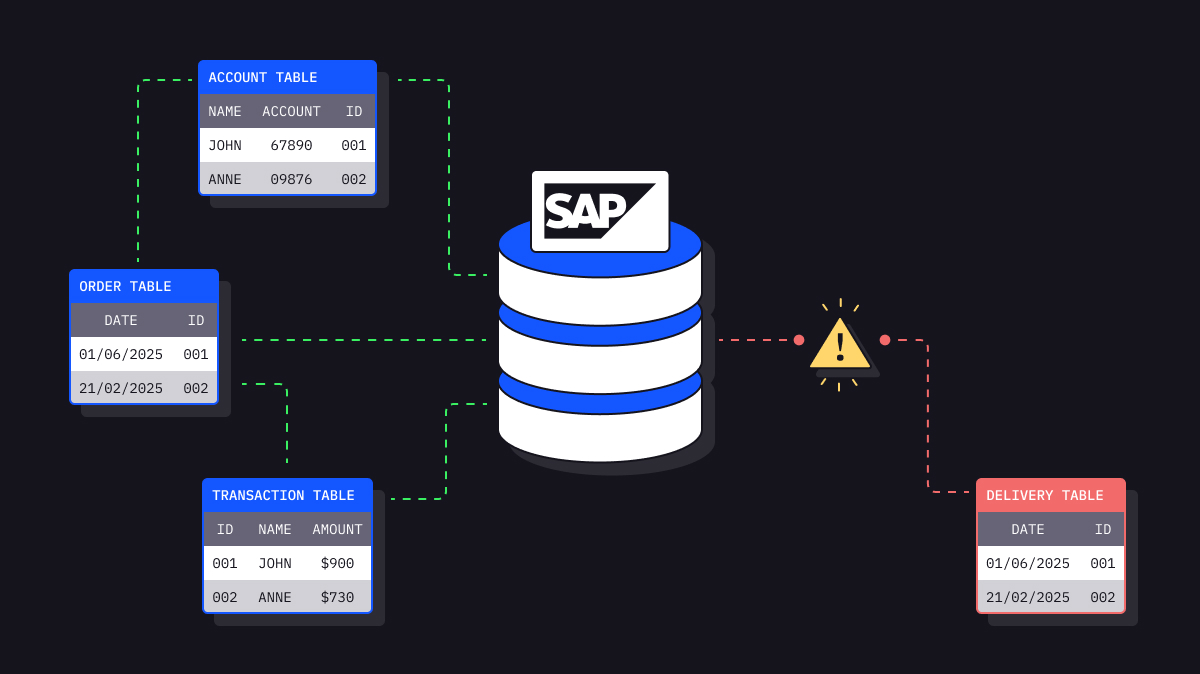
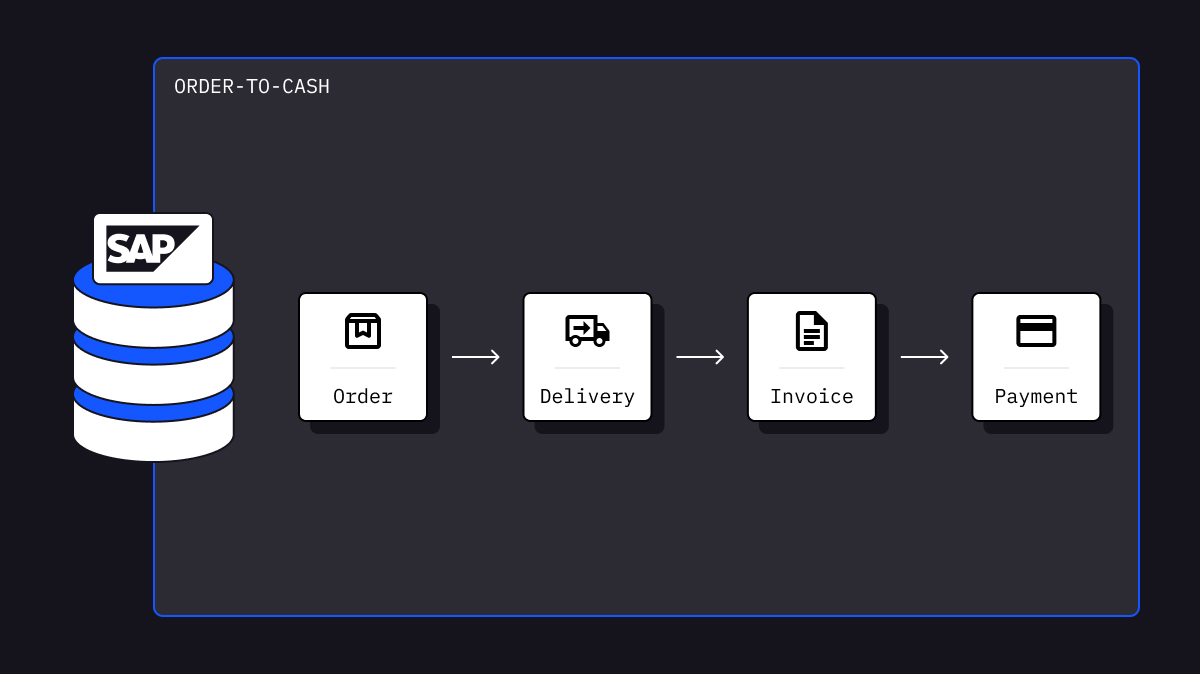
SAP systems are built around a highly complex, interdependent data model. A single business transaction can touch dozens of interconnected tables, each linked by foreign-key relationships, configuration dependencies, and business rules refined over years. These relationships aren't incidental; they are the system. Remove or distort them, and the data no longer makes sense to SAP business processes.
On top of this, SAP environments carry layers of customization: client-specific configuration, custom ABAP (Advanced Business Application Programming) logic, enhancement frameworks, and integrations with upstream and downstream systems. No two SAP landscapes are identical. What works in one organization's test environment may be completely invalid in another's. As Tricentis notes, the complexities of test data in SAP are further compounded by business processes spanning SAP GUI, SAP Fiori, mainframes, and third-party applications like Salesforce, resulting in test data scattered across a wide range of systems and formats.
This complexity is precisely why generic test data management tools consistently fall short.
Where generic Test data tools fail
Most legacy Test data management (TDM) solutions were built for simpler relational database environments with predictable schemas. When you apply these tools to SAP, the cracks appear quickly.
Generic subsetting tools extract data without understanding SAP's internal relationships, producing referentially broken datasets that cause SAP to throw errors before a single test has run. Generic masking tools anonymize fields without understanding the business context behind them, scrambling data that SAP relies on for process logic, posting rules, or configuration lookups.
The consequence isn't just failed tests. It's wasted engineering hours diagnosing data issues rather than validating functionality, and the slow erosion of trust in your test environments. Eventually, teams begin bypassing testing altogether or borrowing production data, creating serious compliance exposure in the process. SAP's own documentation acknowledges that copying a client from production requires significant database storage space and can take several hours or even days, and that's before accounting for the multiple non-production environments a typical enterprise needs to maintain across development, QA, and UAT.
What SAP-native actually means
SAP-native test data management means the platform is built with a deep, structural understanding of how SAP works, not bolted on as an afterthought. For an AI-native platform like Synthesized, this means going further still, using AI to automatically discover, model, and provision SAP data at a speed and scale that manual or rules-based approaches simply cannot match.
In practice, this has several critical implications:
Schema intelligence at the SAP level
A SAP-native platform understands the underlying table structures, functional dependencies, and relationship hierarchies that define SAP's data model. It knows that changing a material number in MARA has downstream implications across MARC, MARD, EKPO, and dozens of other tables, and handles these relationships automatically. The data you provision is internally consistent and immediately valid within your SAP environment.
Preservation of business logic
SAP is a system of record for business processes. SAP-native TDM preserves the business logic encoded in your data: configuration settings, customizing tables, and organizational structures. Test data generated without this context will fail to represent realistic business scenarios, undermining the very purpose of testing.
Compliance without compromise
SAP systems hold some of the most sensitive data in your organization. SAP-native masking goes beyond field-level anonymization. It identifies which data elements are functionally linked and applies privacy protections that preserve referential integrity, so your masked data still behaves like real SAP data without exposing PII. This matters more than ever: DLA Piper's 2025 GDPR survey reports that cumulative GDPR fines since 2018 have now reached €5.88 billion, with enforcement expanding well beyond big tech into financial services, energy, and healthcare.
Deep integration with SAP workflows
Native support means working within SAP's architecture, understanding client structures, transport layers, and the distinction between configuration and transactional data. It means provisioning test data that maps correctly to your system's organizational hierarchy, whether that's a single client or a complex multi-system landscape.
Why this enables better testing and test automation
The broader shift towards AI-driven development and continuous testing pipelines makes SAP-native TDM not just useful, but essential.
Automated testing frameworks are only as reliable as the data they run on. If your test data pipeline produces inconsistent or unrealistic SAP data, your automation will generate false negatives, mask real defects, and ultimately slow down delivery. The bottleneck simply shifts from manual testing to broken data, making diagnosis harder.
SAP-native test data automation removes this bottleneck entirely. Ensuring that every provisioned dataset is structurally valid and business-logic coherent provides your automated pipelines with the foundation they need to run reliably at scale. Teams can spin up compliant, production-ready SAP environments in minutes, rather than the weeks typically required for manual data preparation, keeping pace with the velocity that modern DevOps demands.
The bottom line for engineering leaders
If your organization runs SAP, generic TDM is a liability. The complexity of SAP's data model demands a platform that truly understands it: one that preserves relationships, respects business logic, and integrates natively with how SAP actually works. And as AI-driven development accelerates, the organizations that will move fastest are those that have already solved the data layer.
Synthesized's SAP-native test data management platform is built precisely for this reality. From intelligent schema discovery to automated compliance, it gives SAP engineering teams the data confidence they need to test faster, release safely, and build on a scalable foundation.
Because, in SAP environments, the quality of your testing is only as good as the quality of your data.
Ready to see it in action? Book a demo and find out how Synthesized can transform test data from a bottleneck into a competitive advantage for your SAP engineering organization.