TL;DR
- Order-to-Cash testing fails across SAP, Salesforce, and Ariba more often than it should, and the cause is rarely the application
- Fragmented, manually managed test data across systems is usually the real culprit
- When data isn't aligned across every system in the process chain, integration tests generate noise rather than signal
- AI-native test data platforms like Synthesized provision consistent, production-realistic data across all systems, so integration tests become reliable and fast to diagnose
Here's a scenario that will sound familiar to anyone who has run integration testing across a large SAP enterprise…
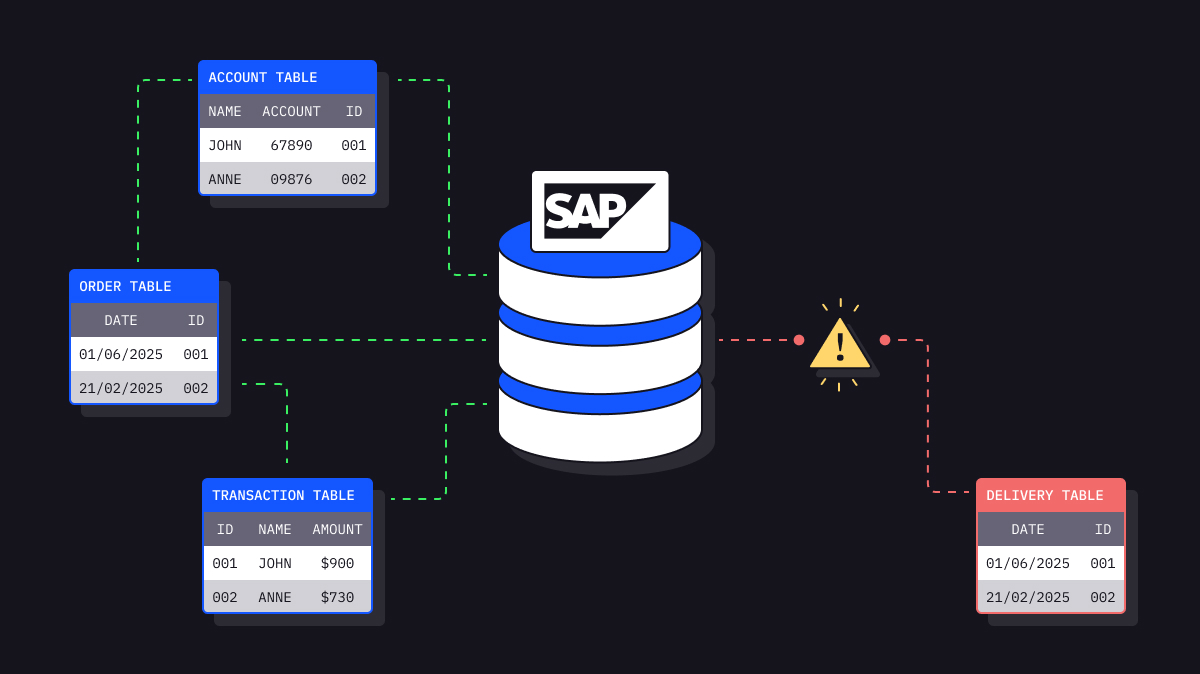
The test is set up. The automation is ready. The flow kicks off in Salesforce, moves into SAP for order processing, touches Ariba for procurement, and then fails somewhere in the middle. The error message isn't helpful. The investigation takes two days. The root cause turns out to be a customer ID that doesn't match across systems, a date field formatted differently in each one, and a pricing record that was refreshed in SAP but not in Salesforce.
Nothing was wrong with the application code. The test data was never aligned to begin with.
If your integration testing looks anything like that, the problem isn't your test automation framework. It's the data underneath it.
Why real-world order-to-cash testing needs to span multiple systems
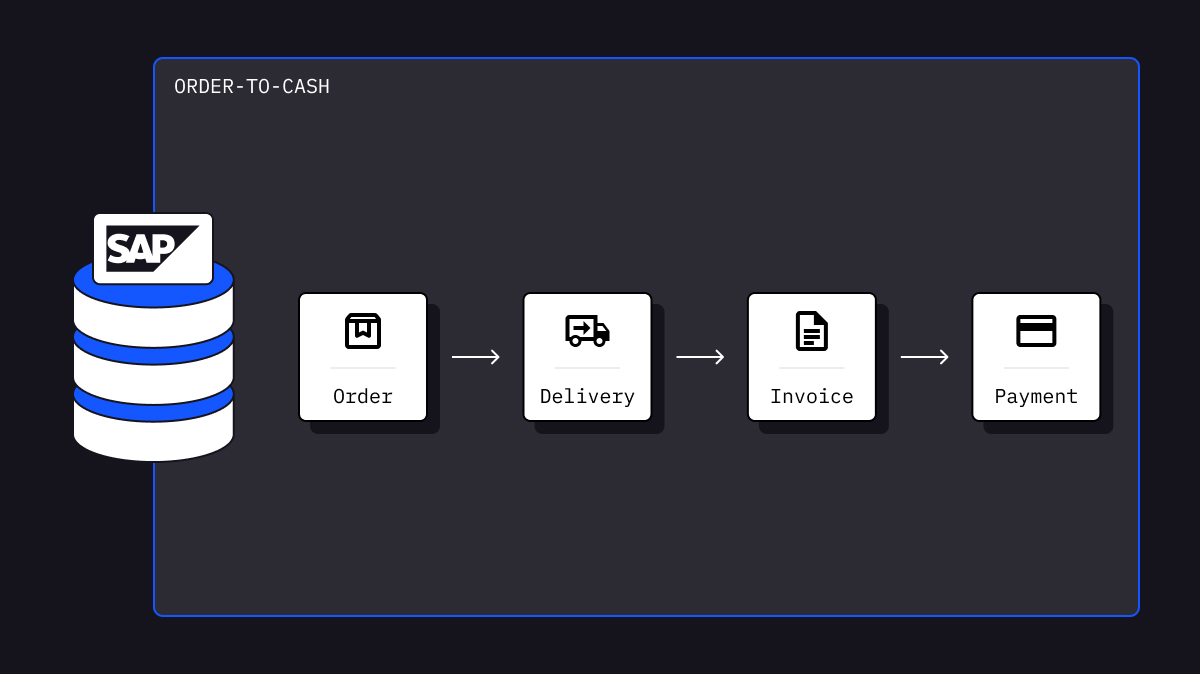
Order-to-Cash looks straightforward on a process diagram. A customer places an order. It gets fulfilled. An invoice gets raised. Payment is received. Clean, linear, logical.
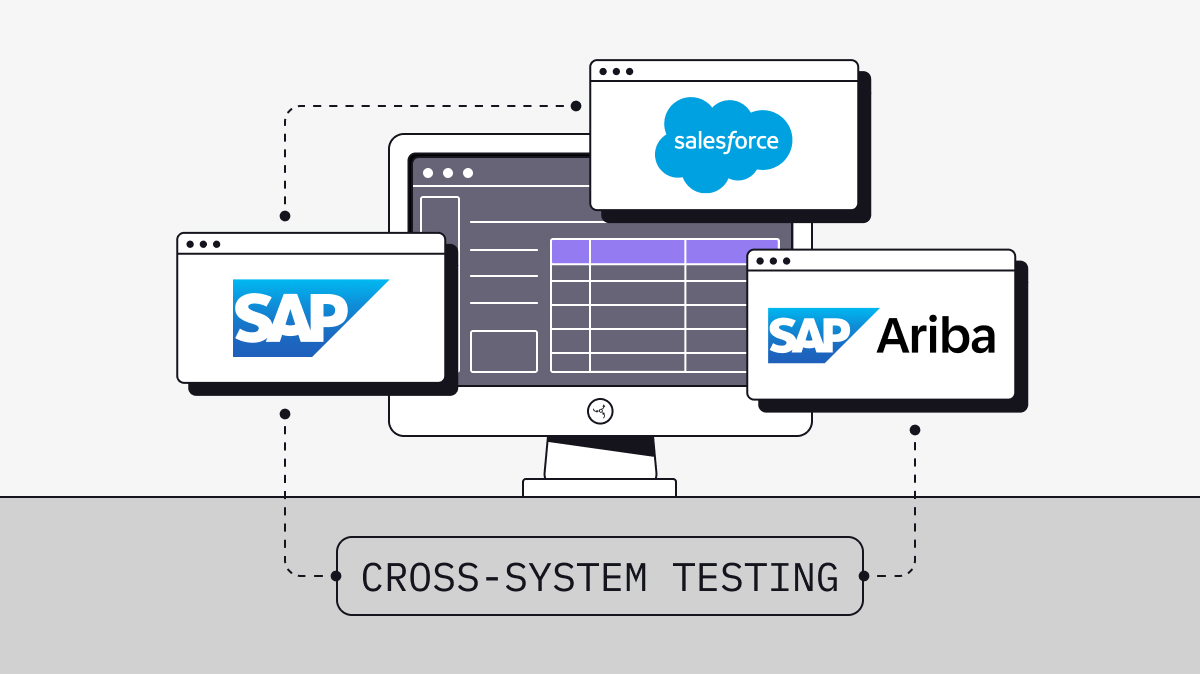
In reality, that process runs across multiple systems simultaneously. Salesforce manages customer relationships and initial order capture. SAP handles order processing, inventory, logistics, and financial posting. Ariba manages procurement and supplier data that feeds into fulfillment. Each system holds its own version of shared data: customer records, pricing, product information, and delivery status. And each one needs to tell the same story for the process to work end-to-end.
The data mapping process between SAP and Salesforce alone can take months, largely because of the fundamentally different structures and formats used by each system. That complexity doesn't disappear when you move from production to a test environment. It gets harder because now you're trying to replicate it manually across systems that were never designed to be kept in sync by hand.
How inconsistent cross-system test data breaks integration tests (even when the code is fine)
Integration tests are supposed to tell you whether your systems work together. When the test data going into those systems isn't consistent, the tests stop being a reliable signal.
IDs that exist in Salesforce don't exist in SAP. Pricing records were updated in one system but not the other. A customer record in Ariba references an organizational structure that was changed in SAP three weeks ago, and nobody updated the test environment. The test fails. The team investigates. Eventually, someone traces it back to a data alignment issue rather than an application defect, and the actual fix takes an hour. The investigation took two days.
End-to-end integration testing produces reliable results only when the data it runs on reflects the same reality across every system it touches. When it doesn't, integration test failures become noise rather than signal. Teams start discounting failures they've seen before. Genuine defects get missed. The test suite that was supposed to give the system confidence quietly loses credibility.
Why traditional TDM fails when consistent cross-system test data is needed
Most TDM approaches were built around a single system. Pull data from production, mask it, and load it into the test environment. That works reasonably well when testing is contained within one application. It breaks down the moment a business process crosses a system boundary.
When each system's test data is prepared separately by different teams using different tools at different times, the likelihood of consistency across all of them is low. Customer IDs get assigned differently. Reference data diverges. Transactional records that should link across systems don't. Because SAP and Salesforce use different data synchronization models, maintaining consistency between them in a manually managed test environment is almost impossible to sustain as both systems evolve.
The result is integration tests that are fragile, slow to diagnose, and expensive to maintain. Teams end up spending more time managing the data than running the tests.
Cross-system test data essentials
For Order-to-Cash testing to be reliable, the data needs to tell a coherent story across every system the process touches. A customer record in Salesforce needs to match the corresponding master data in SAP. Pricing and product information needs to be synchronized. Procurement records in Ariba need to reference the same organizational structures and supplier data that SAP uses. And when any of those systems change, the test data across all of them needs to update together, not independently.
That's not something a manual process can sustain at scale. The systems change too frequently, the relationships are too complex, and the teams maintaining each environment are too disconnected from each other.
It also means having data that covers the scenarios that matter: edge cases in order processing, exception handling in fulfillment, payment reconciliation across currencies and regions. These don't appear naturally in a production copy. They need to be built deliberately, with an understanding of the business logic that drives each step of the process.
Synthesized supports testing across SAP and non-SAP systems, including Salesforce and Ariba, provisioning production-realistic, compliant data for each. Teams can align the same population of records across systems using a shared selection list, and masking is applied deterministically so the same entity produces consistent output wherever it appears. Organizations using Synthesized report delivery cycles running up to 70% faster, with integration test reliability that comes from data that was deliberately aligned rather than independently copied.
If your integration tests are spending more time diagnosing data misalignment than catching real defects, it's worth asking whether the problem lies in the testing or in the data it's running on.
Want to see what consistent cross-system test data looks like in practice? Book a demo and find out how Synthesized helps enterprise teams test end-to-end processes with data that holds together across every system in the chain.