TL;DR
- Test data bottlenecks are one of the most consistent causes of S/4HANA program delays, but they rarely get investigated until a schedule has already slipped
- The bottlenecks appear at predictable points: environment preparation, regression cycles, integration testing, and compliance validation
- Each one has a root cause in manual, slow, or poorly scoped data processes, not in the testing approach itself
- Removing them means making data available faster and with less manual effort, across whatever transformation method the scenario requires
- The result is S/4HANA programs that test more thoroughly, catch more defects earlier, and go live with more confidence
At some point in almost every S/4HANA program, someone asks why the testing phase is running behind.
The answers vary. Not enough resources. Scope changed. Integration issues took longer to resolve than expected. All of those things may be true. But dig into the details, and there's usually something else sitting underneath them. The test data wasn't ready. Or it was ready, but it wasn't right. Or it was right for two weeks, and then the configuration moved on, and nobody updated the environments.
More than 60% of S/4HANA migrations run over time, according to a 2025 Horváth study of 200 SAP user companies. The average overrun is 30%. Test data is one of the most common contributing factors. It rarely gets named as the cause because by the time it becomes visible, it looks like something else.
Here's where it actually shows up.
Why does SAP test environment preparation overrun?
Copying a client from production can take several hours to several days. That's before post-copy work begins. Configuration validation. Masking. User setup. Integration checks. Each step takes time and often requires people from Basis, infrastructure, and QA to coordinate around it.
Run that across development, QA, performance, and UAT environments, and the overhead compounds quickly. The environment that was supposed to be ready on day one of the testing phase is ready on day four. Or day seven. Testing time shrinks. The team works with what they have.
And the environment is already out of date.
Why SAP regression cycles fall behind schedule
Configuration changes frequently in an active S/4HANA program. New transport requests go in. Business rules get refined. Customizations get adjusted based on testing feedback.
SAP customers on a yearly QA refresh cycle spend nine months testing against data that is more than three months old. In a program environment where things change weekly, a dataset that's three weeks behind the current configuration is already telling you the wrong things. Tests pass that shouldn't. Coverage gaps don't show until UAT. Or production.
Nobody notices while it's happening. That's the problem.
Why integration tests fail across SAP and connected systems
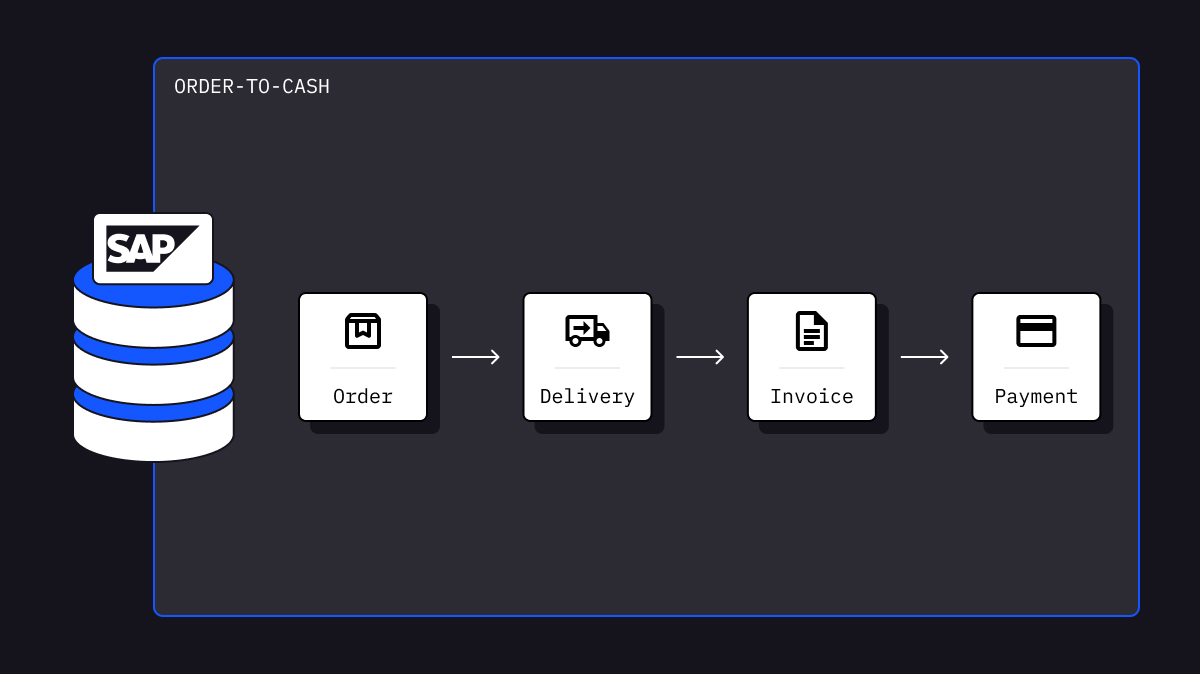
Order-to-Cash. Procure-to-Pay. HR processes spanning SuccessFactors and core ERP. Every one of these needs consistent data across every system it touches.
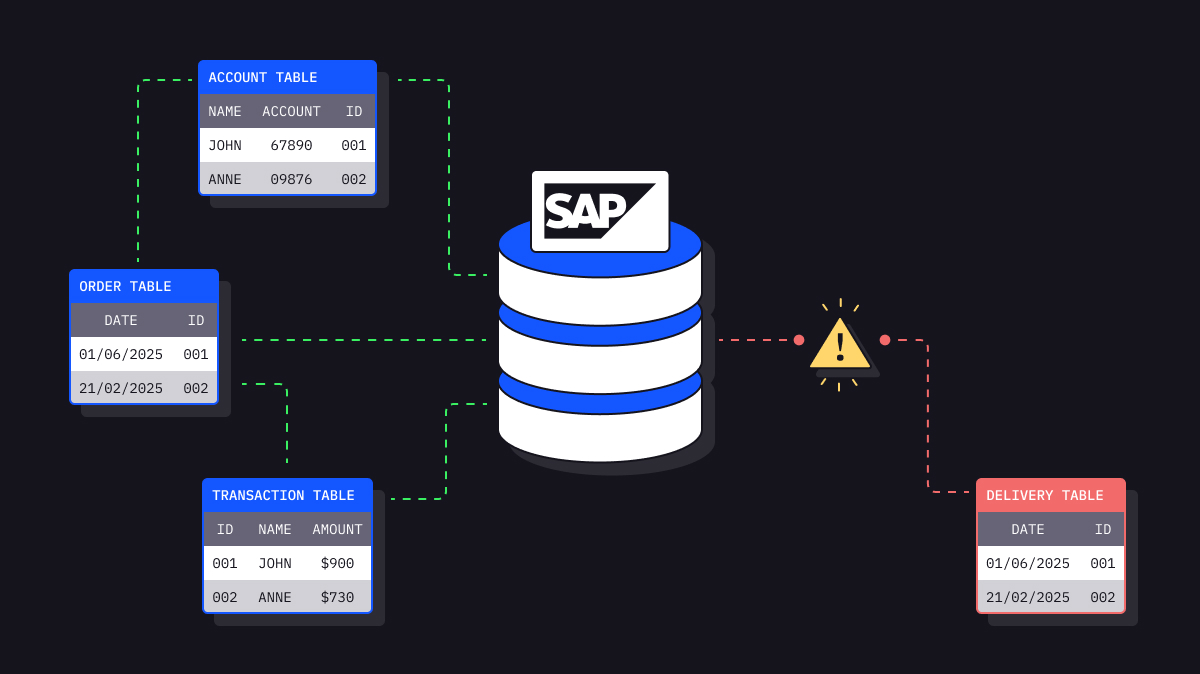
That's not how it usually gets prepared. Each system gets handled separately, by different people, at different times. The customer ID in Salesforce doesn't exist in SAP. The vendor in Ariba points to an org structure that changed three weeks ago. The test fails.
Two days of investigation later, someone finds a data preparation step that went wrong before the test cycle even started. The fix takes an hour. The investigation cost two days of program time.
It happens again next cycle. Same cause. Same investigation. Same result.
SAP test environments and the compliance gap
Sensitive data moves through a lot of non-production environments in an S/4HANA program. It needs to. But the regulatory obligations attached to that data don't pause because the program is under pressure.
Manual masking rules get written for the obvious fields. Schemas evolve, and the rules don't. Contractors access environments that contain data they shouldn't. When a compliance review asks how sensitive data was protected across non-production environments during the program, the answer is rarely as clean as anyone would like.
How to remove SAP test data bottlenecks for good
The programs that don't lose weeks to these problems have usually made one decision early: test data is a deliverable, not a background task.
What that means in practice looks different depending on the program. Sometimes it's faster to copy and refresh, so environment preparation takes minutes instead of days. Sometimes it's automated masking, so compliance is built into how data gets created rather than applied manually after the fact. Sometimes it's on-demand provisioning aligned to business process boundaries, so integration tests run against data that actually holds together across systems.
The generation method matters less than the principle. Data that's available when the team needs it, that reflects current conditions, that's consistent across every environment and system involved.
What used to take four weeks and sixteen people now takes forty minutes. That's a different program.
Synthesized's AI-native test data management platform covers every generation method, across SAP and non-SAP systems, with storage footprints up to 99% smaller than full database copy approaches. Organizations using Synthesized report delivery cycles running up to 70% faster.
If test data is already slowing your program down, it's worth working out what it would take to change that before the next regression window opens.
Want to see what this looks like in practice? Book a demo and find out how Synthesized helps S/4HANA program teams test more thoroughly, catch more defects earlier, and go live with confidence.