TL;DR
- Database copies, time slicing, and scheduled refreshes are how most SAP teams manage test environments, and they remain the right foundation
- The challenge is making them work at the pace and scale modern SAP delivery demands, without weeks of manual effort and environments that are already out of date before testing begins
- Time slicing works best when it follows business process boundaries rather than calendar dates
- Refresh cycles work better when they run on demand rather than on a fixed schedule
- Modern provisioning makes all of these approaches faster, more consistent, and less dependent on the right people being available at the right time
Nobody sat down and designed the way most SAP teams manage test data. It evolved, and most teams are still running on the version that made sense years ago.
The question now is how to make it work better.
How most SAP teams manage test environments today
The typical setup is some version of this: Production gets copied into non-production environments on a schedule. Development, QA, UAT, performance testing: each one needs data, and the answer is usually a refresh from production whenever someone last decided the timing was good enough.
Time slicing was introduced to make things more practical. Pick a date range, pull the relevant data, and work with something smaller. Storage numbers improve. Provisioning looks faster on paper.
The challenge is getting the slice right. And that's where most teams run into difficulty.
Why SAP time slicing needs to follow business process boundaries
SAP processes don't respect calendar windows. That's the core issue with date-based time slicing.
Take Order-to-Cash, for example. A purchase order from one period connects to a goods receipt in the next, which connects to an invoice and a payment run that might sit weeks outside whatever date range was chosen. Slice the data to a date range, and those connections break. The dataset looks fine. The processes that depend on it fail. The tests break, and the investigation starts from the wrong place entirely.
SAP customers on a yearly QA refresh cycle typically spend nine months of the year working with data that is more than three months old. For teams shipping regularly, that creates a gap between what tests are telling them and how the system actually behaves today.
There is also a skill dependency that rarely gets acknowledged. Time slicing needs someone who understands both the parameters and the SAP business processes that depend on the data. When it is configured without that context, the problem surfaces later inside a test cycle, when something breaks in a way that takes days to trace back.
The fix is not to stop time slicing. It's to make the time slicing logic follow business process boundaries rather than calendar dates, and to ensure it looks outside the specified window where needed, so nothing breaks at the edges.
Why SAP refresh cycles struggle to keep pace with modern delivery
Good time slicing configuration helps, but the refresh cycle itself creates a separate challenge.
A system refresh in SAP brings with it configuration validation, customization checks, user management, and integration testing. Much of that requires manual work. It takes days or weeks. Teams across Basis, infrastructure, and QA have to coordinate around it, plan for downtime, and wait.
Development does not wait. By the time the environment is back and ready, a configuration change has gone in somewhere. A new feature was deployed. The refreshed environment is already behind before a single test runs against it.
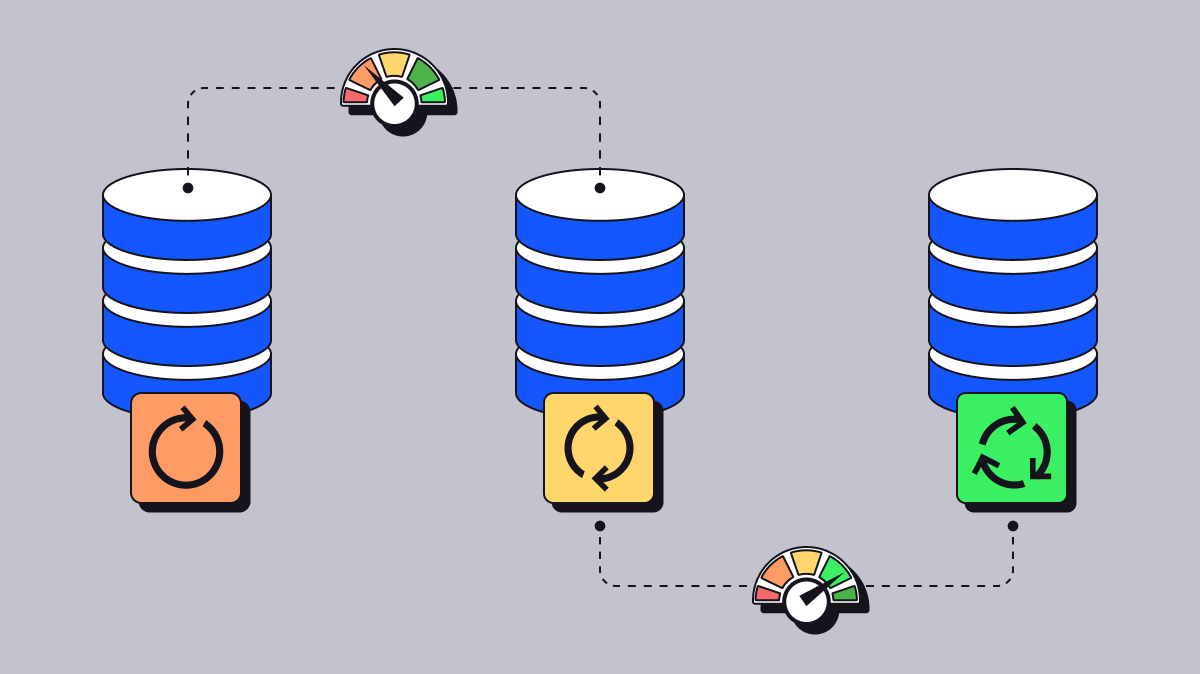
For teams running frequent releases, a data layer on a weekly or monthly refresh schedule creates a persistent gap between the environment and the current state of the system. The refresh cycle isn't wrong; it just needs to be faster and more flexible.
The storage cost of SAP database copies adds up fast
A full copy needs roughly the same storage on the target as it occupies in production. For large SAP landscapes running into terabytes, maintaining separate near-production environments for development, QA, performance testing, and UAT adds up fast.
SAP's own documentation puts client copy runtimes at several hours to several days, depending on volume. Across a full landscape on a regular refresh schedule, that is a substantial ongoing cost. It rarely appears as a single line item. It gets distributed across team time, infrastructure budgets, and delayed test cycles until someone adds it up.
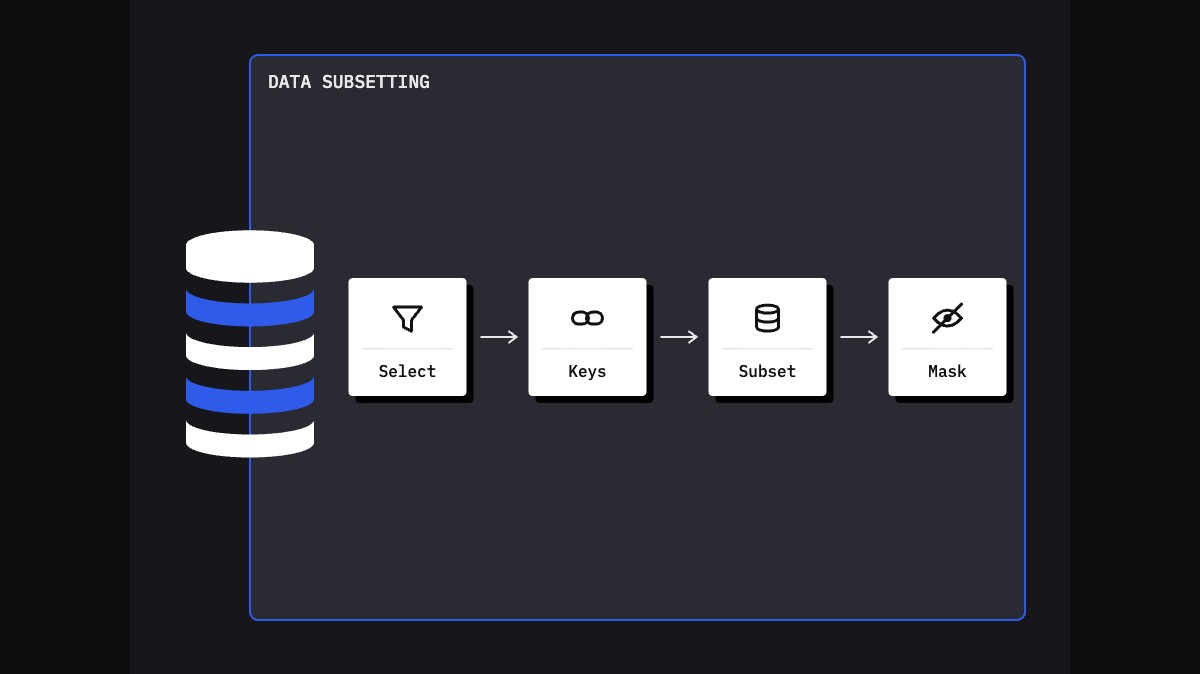
Right-sized subsets that preserve the relevant data for each test scenario, rather than full production copies across every environment, reduce that overhead significantly without compromising coverage.
What getting more from SAP test data provisioning looks like
The teams making the most progress here haven't abandoned copies, time slicing, or refreshes. They've made them work differently.
On-demand provisioning starts from what a specific test needs, not what production happened to contain last month. Master data and transactional data are handled according to how they actually behave. Time slicing logic follows business processes rather than calendar dates, and looks outside the specified window where it needs to, so nothing breaks at the edges. Masking happens at the point of generation rather than as a step someone has to remember to run.
Environments are ready in minutes. They are coherent from the start. They do not need manual repair before testing can begin. And when something changes in development, the next provisioning run reflects it automatically.
Synthesized's AI-native test data management platform works this way. On-demand provisioning of production-realistic, compliant SAP test data, with time slicing that follows business processes and storage footprints up to 99% smaller than full database copy approaches. Organizations using Synthesized report delivery cycles running up to 70% faster.
If the copy and refresh cycle is already a source of friction on your team, it's worth asking what it would look like to run the same approach with significantly less manual effort and significantly shorter wait times.
Want to see what on-demand SAP test data provisioning looks like in practice? Book a demo and find out how Synthesized helps SAP testing teams move faster, test more reliably, and get more from their existing test data processes.